Table of Contents
Shoppers now get product answers straight from Google AI Overviews, ChatGPT, Perplexity and Microsoft Copilot, often before they reach a single store. If you run an ecommerce business, that raises a fair question: does SEO still pay off?
It does, but the way you earn visibility is shifting. This guide explains how AI search impacts SEO for ecommerce stores, which parts of your strategy matter more, and what to change first so organic search keeps producing sales.
📌 TL;DR:
- AI search answers product questions directly, so shoppers see fewer lists of links and more named recommendations.
- Traditional SEO is still the foundation, because AI platforms draw on pages they can crawl, understand and trust.
- Clear product data, strong collection pages and consistent brand mentions across the web matter more than before.
- AI referral traffic is still a small share of visits but is growing fast, and some of its influence will not show in your analytics.
- Stores that fix technical and content basics first are best placed to be recommended.
What Is AI Search and How Does It Differ From Traditional Search?
AI search is any search experience where an AI model writes the answer instead of only listing links. That includes Google AI Overviews and AI Mode, ChatGPT search, Perplexity and Microsoft Copilot.
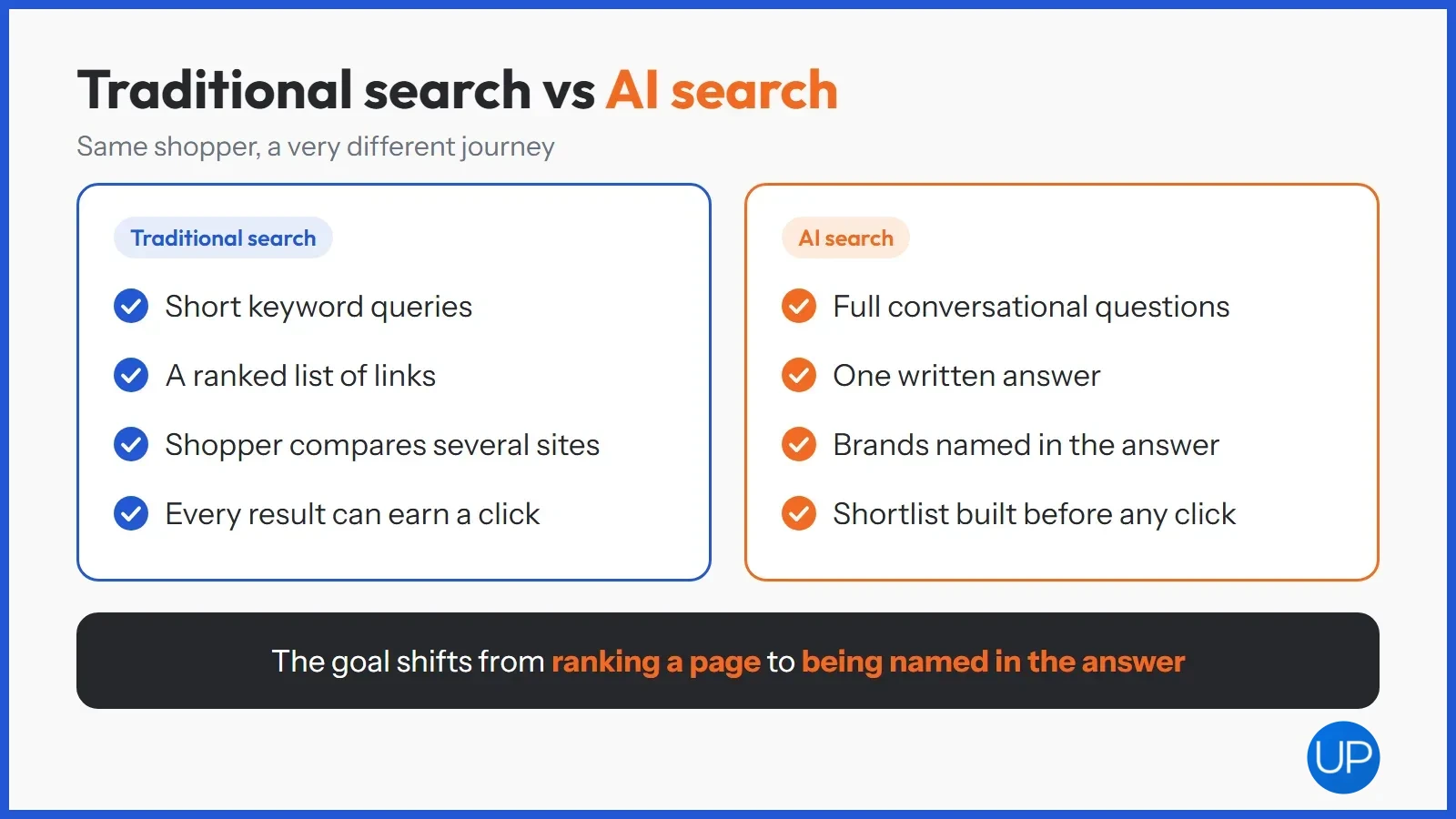
Traditional search matches a query to a ranked list of pages. AI search reads several sources, writes a response and often names the brands or products it recommends. We covered Google’s side of this shift in our breakdown of Google’s biggest search change in 25 years.
- Queries are longer. Shoppers type full questions instead of two or three keywords.
- Answers come first. The response sits above or instead of the usual results.
- Sources are selective. Only a handful of pages and brands are named or cited.
- Clicks are harder to win. A shopper can get a recommendation without visiting any site.
How Does AI Search Impact SEO for Ecommerce Stores?
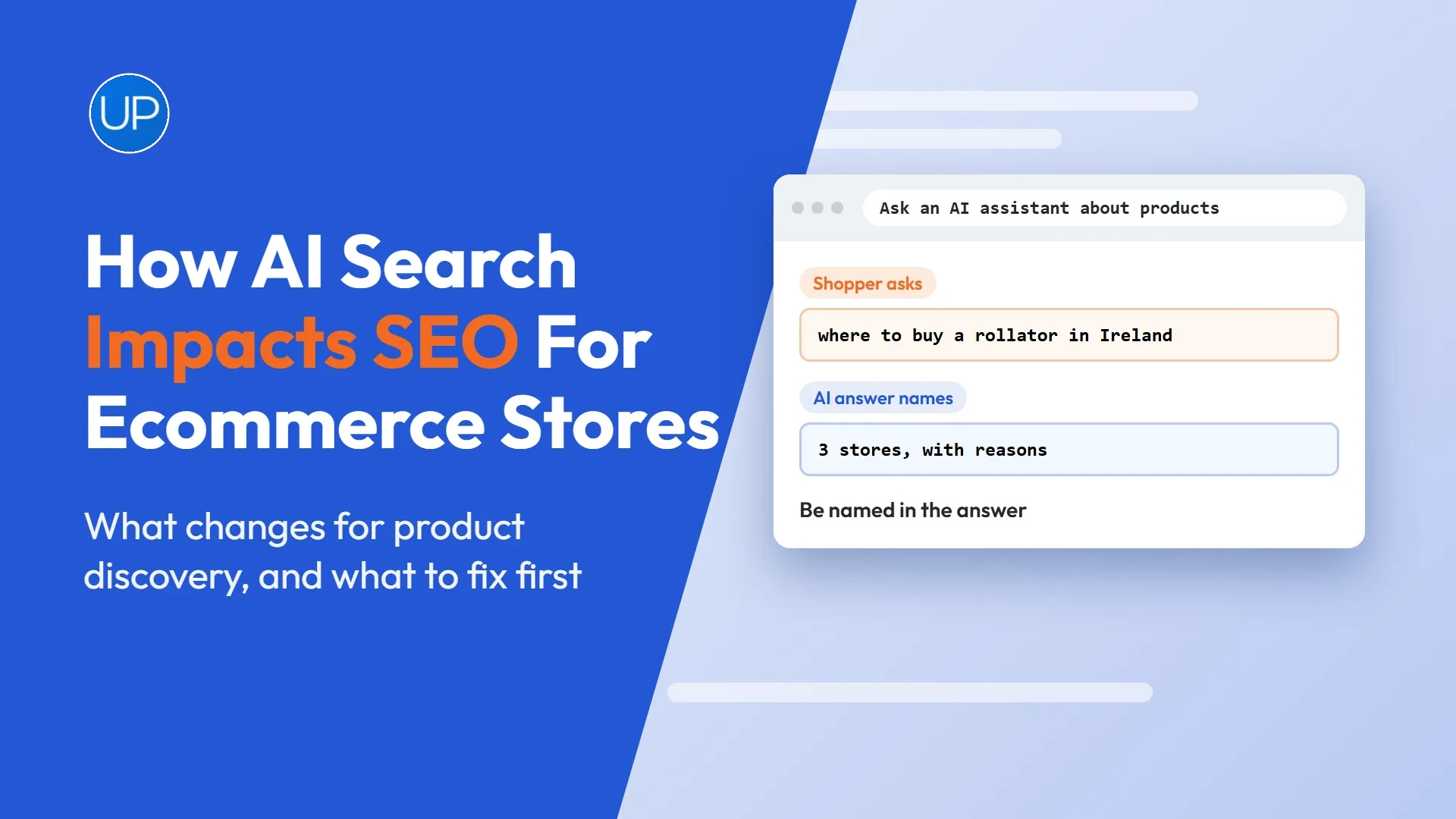
AI search changes where shoppers find and compare products. A shopper asking “where to buy a rollator in Ireland” or “best waterproof boots for wide feet” now gets a short list of named options, so the goal shifts from ranking a page to being named in the answer.
- Research happens inside the answer. Comparing, filtering and shortlisting can all happen without a store visit.
- Shopping features are arriving in chat. ChatGPT now has shopping features and invites merchants to share product feeds, and agentic shopping, where an AI agent researches and compares products on the shopper’s behalf, is the direction of travel.
- Brand recognition carries more weight. A store the model already associates with a product type is more likely to be recommended.
- Intent is clearer. Conversational, purchase-led questions often signal a shopper who is close to buying.
Does AI Search Replace Traditional SEO?
No. AI search sits on top of the same foundations: pages that can be crawled, content that answers the question, and a site that other sources trust. Dropping SEO to chase AI visibility removes the base AI platforms rely on.
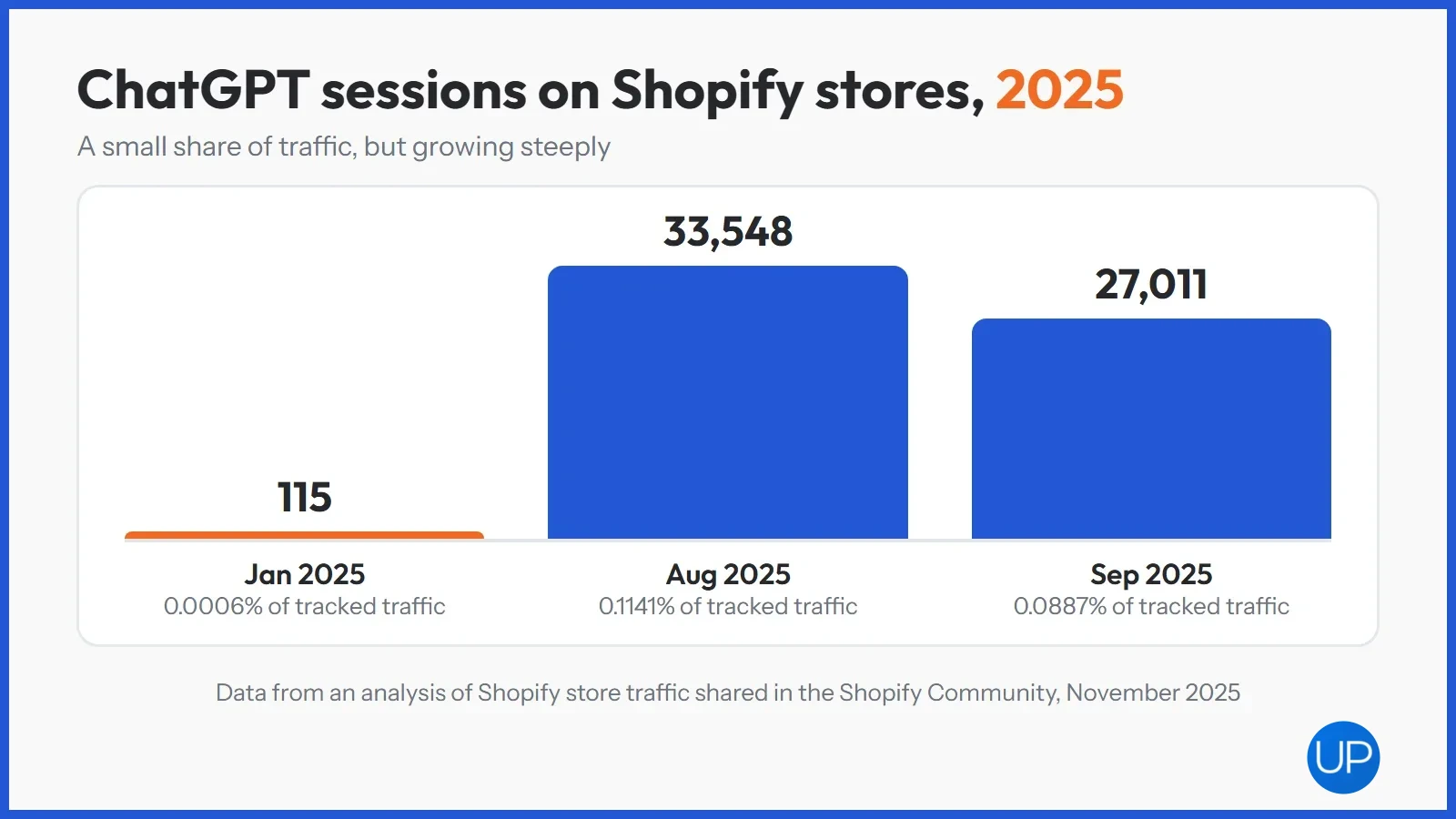
The volumes are still small. One analysis of Shopify store traffic shared in the Shopify Community showed ChatGPT sessions growing from 115 in January 2025 to 33,548 in August 2025, which was 0.1141% of the tracked traffic. That is a tiny share, but the growth is steep.
It also understates the picture. A shopper may see your store recommended in a chat and then search your brand name directly, so the visit is logged as brand search and not as AI traffic.
Which Ecommerce SEO Factors Matter More in AI Search?
The factors are familiar. What changes is how much weight they carry, because an AI model needs clear, consistent information it can quote with confidence.
- Clear product and brand data. State product names, materials, sizes, prices and availability plainly, and keep them consistent across your site and any marketplaces.
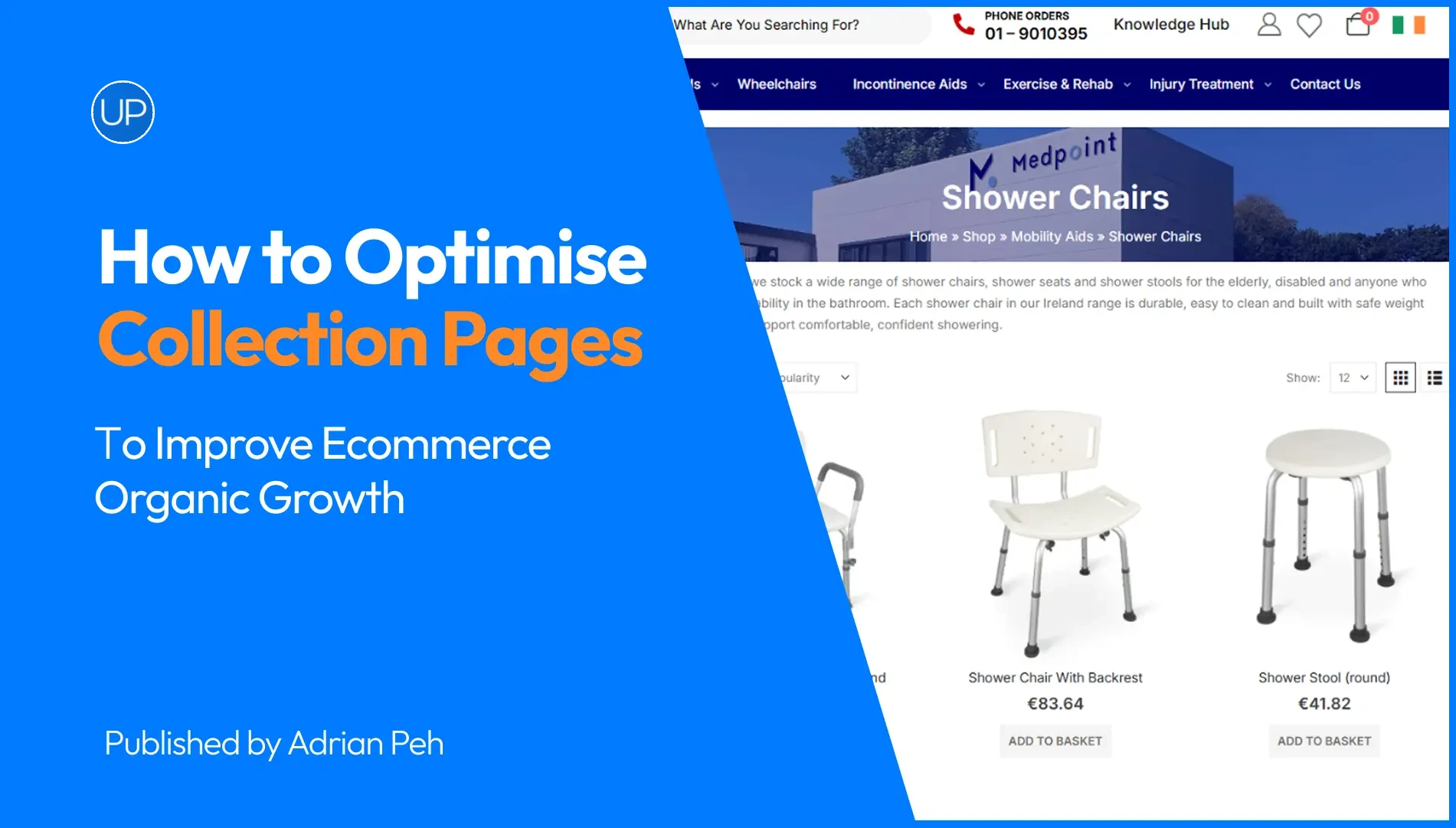
- Collection pages that answer buying questions. Strong category copy gives AI platforms something to quote. Our guide on how to optimise collection pages shows how.
- Structured data. Product, review and availability markup helps platforms read your catalogue accurately.
- Reviews and third-party mentions. Mentions on Reddit, listicles and social platforms help a model corroborate that your store is a real option.
- Crawl and rendering access. If products sit behind scripts or blocked paths, they cannot be retrieved. Our technical SEO services start here.
- Authority. Backlinks from relevant, trusted sites still support both Google rankings and AI recommendations.
How Do AI Platforms Decide Which Stores to Recommend?
No platform publishes a full formula, and the details change often. In our experience, a clear pattern shows up in which stores get named.
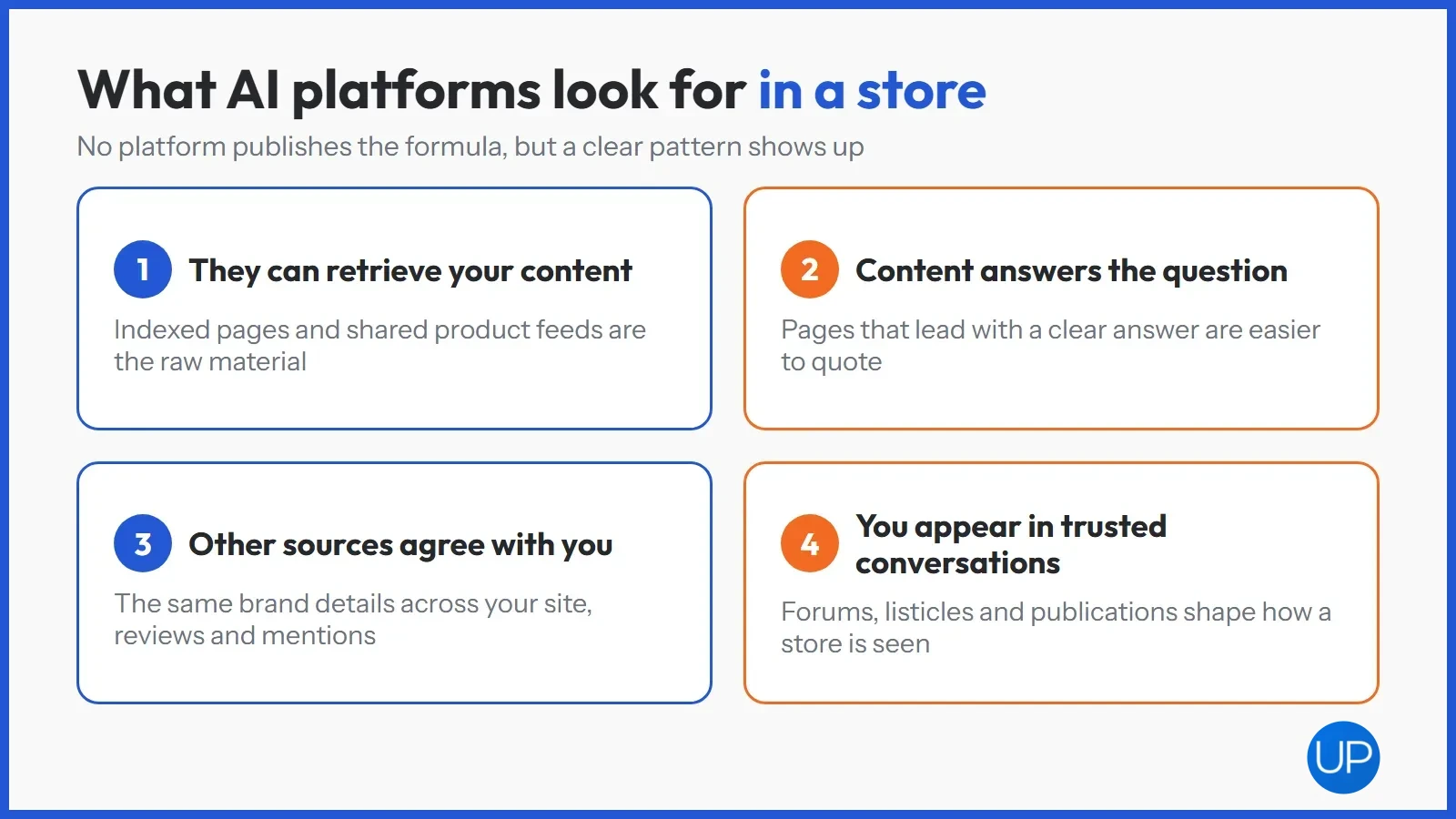
- They can retrieve your content. Indexed pages and shared product feeds are the raw material.
- The content answers the question directly. Pages that lead with a clear answer are easier to quote than pages that bury it.
- Other sources agree with you. A brand described the same way across its own site, reviews and independent mentions looks more reliable.
- The brand appears in trusted conversations. Forums, comparison articles and publications feed the picture a model builds of a store.
What Can Go Wrong for Stores That Ignore AI Search?
The risk is not a sudden drop. It is a slow loss of visibility at the moment shoppers are forming a shortlist.
- Competitors are named in AI answers while your store is missing.
- Thin product and collection pages give a model nothing useful to quote.
- Content that cannot be crawled or rendered is invisible to AI platforms.
- Product details that differ between your site and marketplaces reduce trust.
- Reporting that only tracks rankings misses citations and AI referrals completely.
What Does AI Search Visibility Look Like in Practice?
A real example is our AI SEO case study for Medpoint, an Irish mobility and physio retailer. The goal was to be recommended for high-intent, conversational queries such as “where can I buy a wheelchair” and “where to buy a rollator in Ireland”.
The work focused on the whole search ecosystem, not only Google rankings:
- Purchase-driven conversational queries replaced short generic keywords.
- Content was structured to match how large language models retrieve information.
- Backlinks came from relevant, authoritative sources.
- Brand mentions grew across social media, listicles and Reddit.
The project is ongoing. So far it has produced over 17,000 monthly citations, as tracked in Bing Webmaster Tools, rankings in ChatGPT for the target queries, and key articles appearing consistently in AI Overviews. Our AI SEO services follow the same approach.
How Should Ecommerce Stores Adapt Their SEO Strategy?
Treat AI visibility as part of one SEO system, not a separate project. Work in this order:
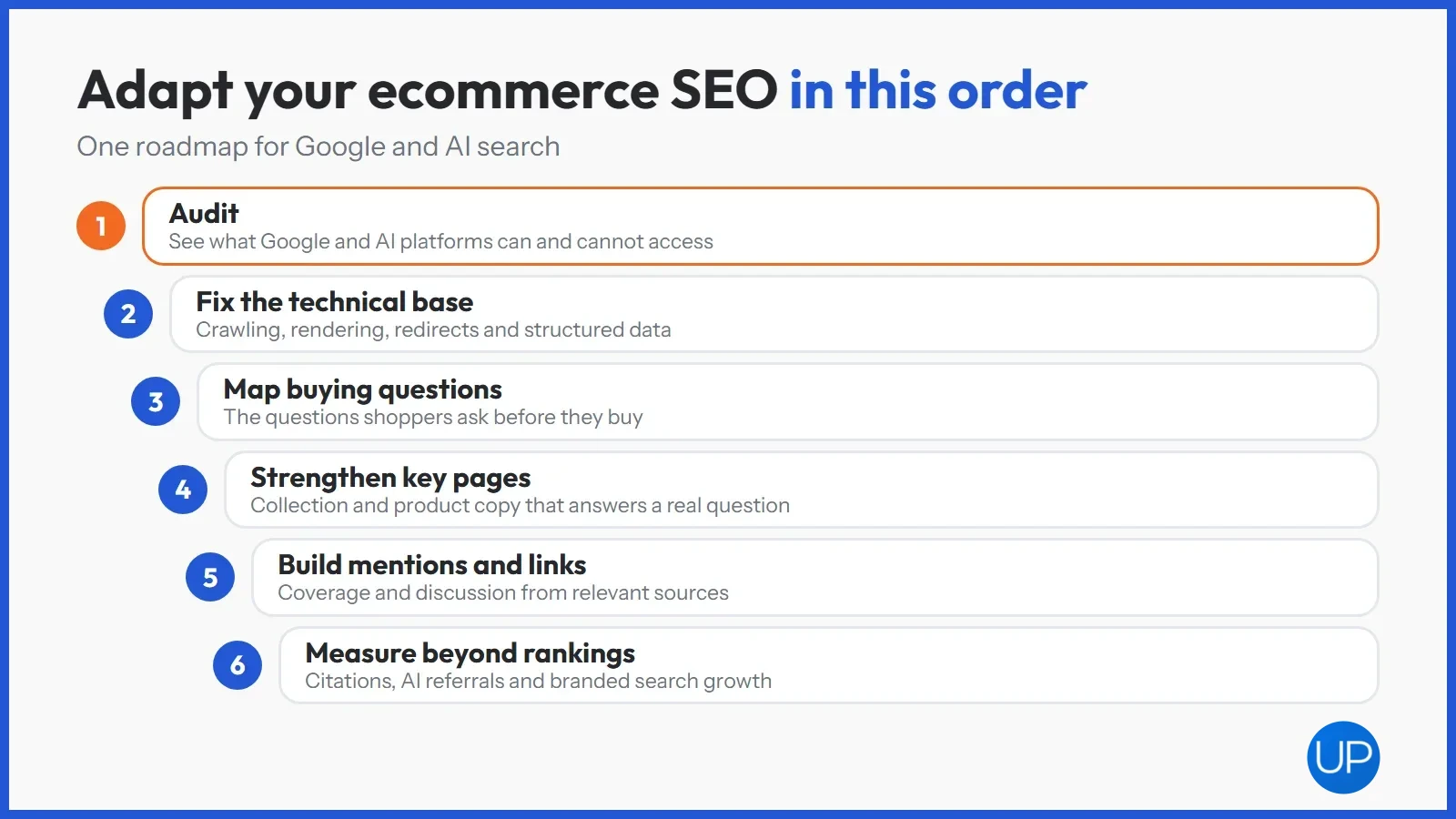
- Audit first. A website SEO audit shows what AI platforms and Google can and cannot access.
- Fix the technical base. Crawling, rendering, redirects and structured data come before content.
- Map buying questions. List the conversational questions shoppers ask before they buy in your category.
- Strengthen key pages. Improve collection and product copy so each page answers a real question. Our on-page SEO services cover this.
- Build mentions and links. Earn coverage and discussion from relevant sources.
- Measure beyond rankings. Track citations in Bing Webmaster Tools, AI referrals in analytics and growth in branded search.
Working with an ecommerce SEO agency that treats AI visibility and traditional SEO as one roadmap will get you there faster than running them apart.
Conclusion
How AI search impacts SEO for ecommerce stores comes down to one shift: visibility now depends on being named, not only ranked. The foundations still decide who gets named, which means crawlable pages, clear product data, strong collection content and a brand that others talk about.
The stores that act now build a lead that compounds, because AI platforms favour brands they already trust. Get the foundations right, then build the mentions and measurement that keep your store in the answer.
Frequently Asked Questions
Yes. AI platforms draw on pages they can crawl, understand and trust, which is what SEO builds. AI referral traffic is still a small share of visits, so Google organic remains the main source for most stores. The best approach is to keep investing in SEO and structure it so AI platforms can use it.
Start with the technical base, then make your content answer buying questions directly. Keep product data clear and consistent, add structured data, and build reviews and mentions on trusted sites. Track citations and AI referrals as well as rankings.
Agentic shopping is when an AI agent researches, compares and sometimes buys products on a shopper’s behalf. For ecommerce stores, it means clean product data and clear brand signals matter, because an agent chooses from what it can read and verify.
No. AI changes how shoppers find and compare products, but stores still supply, fulfil and support the purchase. The risk is not replacement, it is being left out of the answers shoppers see first.
AI tools can speed up research, drafting and analysis. They cannot decide which commercial opportunities matter for your store or build the authority and technical foundations that earn visibility.