Table of Contents
Shopify is a strong platform for ranking an online store, but it is not finished out of the box. It handles the technical basics for you, then leaves a set of gaps that most stores never close.
This guide gives you an honest view of Shopify SEO. It covers what the platform does well, where it falls short, and the practical fixes that turn a standard store into one that earns steady organic sales. It is written for owners and marketers who run a store on Shopify or are deciding whether to move to it.
📌 TL;DR:
- Shopify gives you sitemaps, canonical tags, SSL, editable metadata and fast hosting without any setup.
- Its weak points are fixed URL structures, duplicate collection paths, filter URLs, app bloat and thin collection pages.
- Most gaps are fixed with theme changes, careful internal linking, unique collection copy and a lean app stack.
- The platform is rarely the reason a store does not rank. Strategy and execution usually are.
Is Shopify Good for SEO?
Yes, for most stores. Shopify is a hosted platform, so security, uptime and server speed are managed for you. That removes a whole category of problems that self hosted stores have to solve themselves.
The common complaints on Reddit and in SEO forums are real, but they are mostly about control. You cannot change every part of how Shopify builds URLs or files. You can work around nearly all of it.
- Good fit: stores that want reliable technical foundations and focus their effort on collections, content and links.
- Harder fit: very large catalogues that need full control over URL structure, faceted navigation and server rules.
What Does Shopify Do Well for SEO?
Shopify covers the technical basics that many store owners would otherwise forget. These features work from day one and need little maintenance.
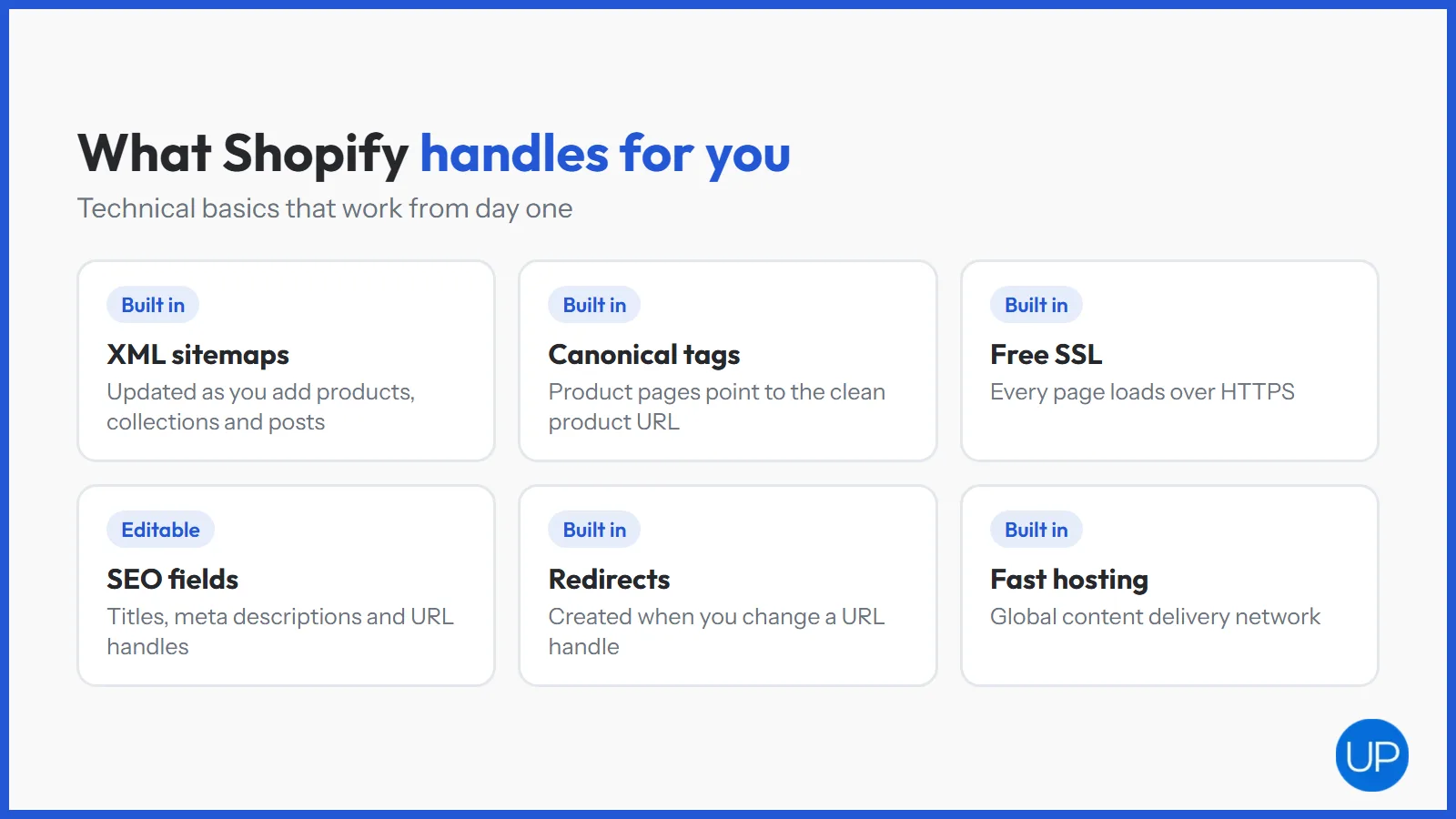
- Automatic XML sitemaps at /sitemap.xml, updated as you add products, collections, pages and blog posts.
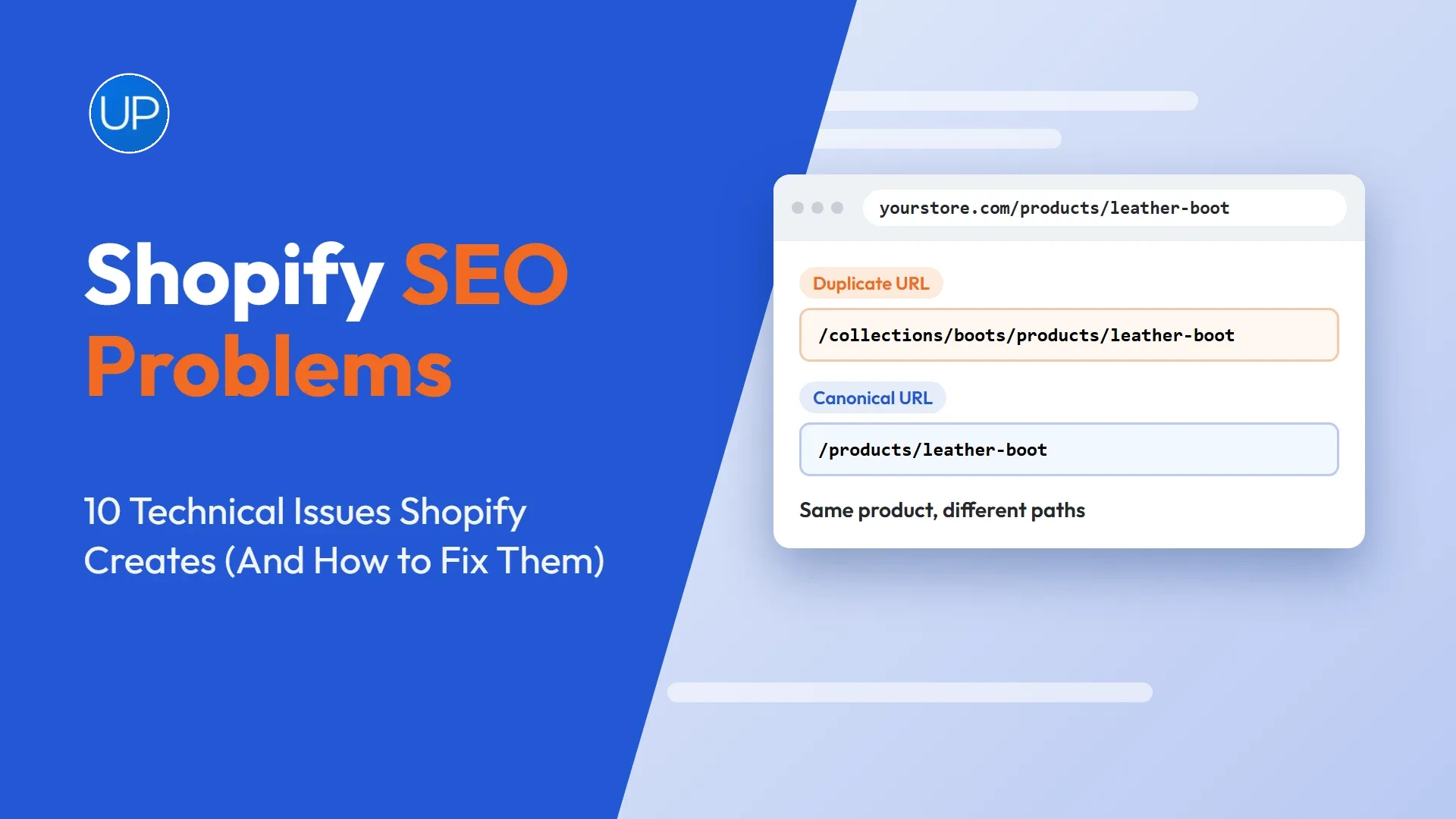
- Canonical tags on product pages, pointing to the clean product URL rather than the collection path.
- Free SSL on every store, so every page loads over HTTPS.
- Editable SEO fields for page titles, meta descriptions and URL handles on products, collections and pages.
- Automatic redirects when you change a URL handle, as long as the redirect box stays ticked.
- Fast global hosting on a content delivery network, which gives most stores a good starting point for speed.
- An editable robots.txt through the robots.txt.liquid template, for stores that need custom crawl rules.
Because these basics are handled, your effort can go into the work that moves revenue. That is where on page SEO services and collection page improvements usually pay back fastest.
Where Does Shopify SEO Fall Short?
The gaps come from decisions Shopify makes for every store. They are not bugs, but they create duplication, crawl waste and weak pages if nobody manages them. We cover the technical detail in our guide to the technical issues Shopify creates, so here is the short version.
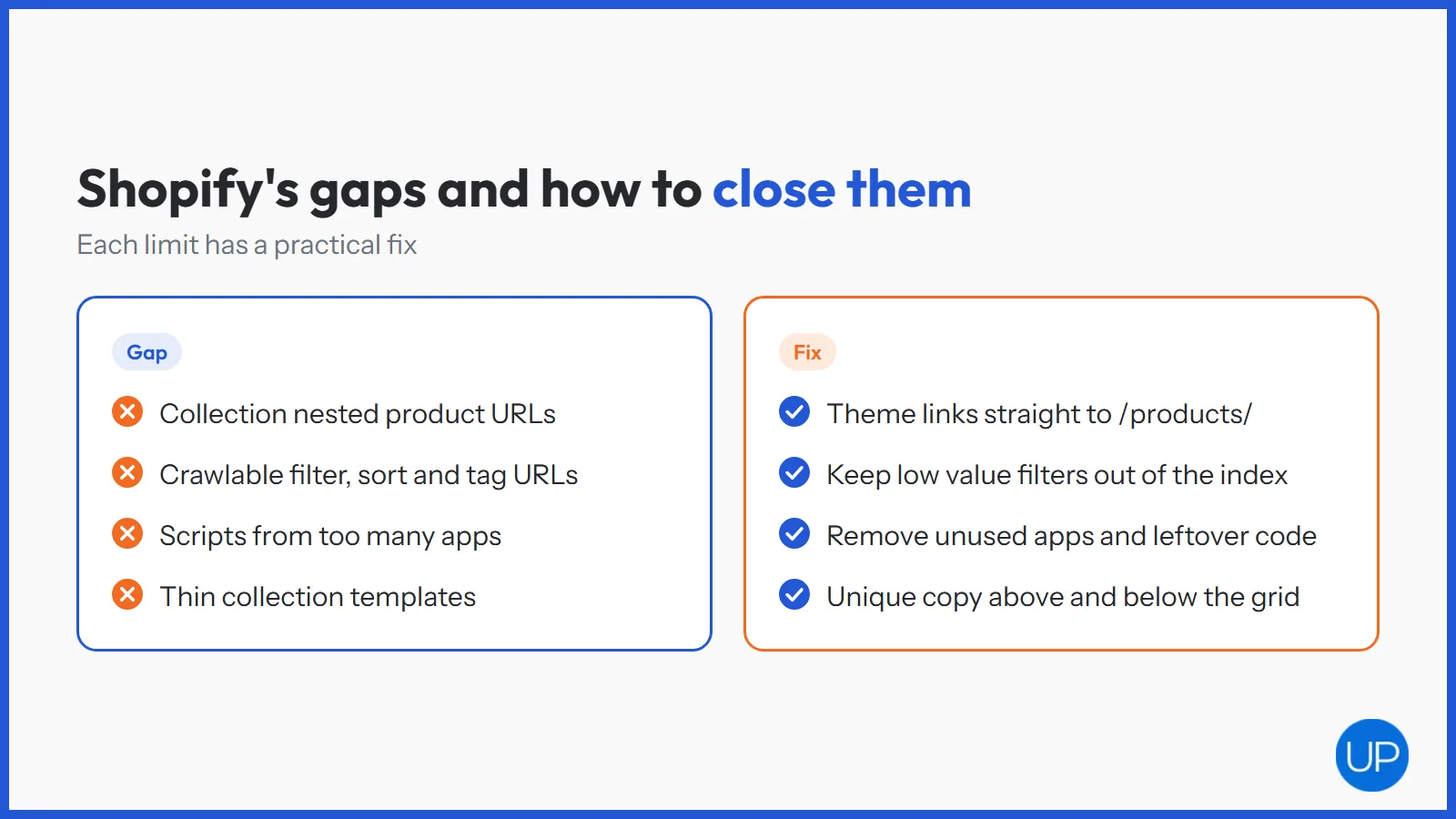
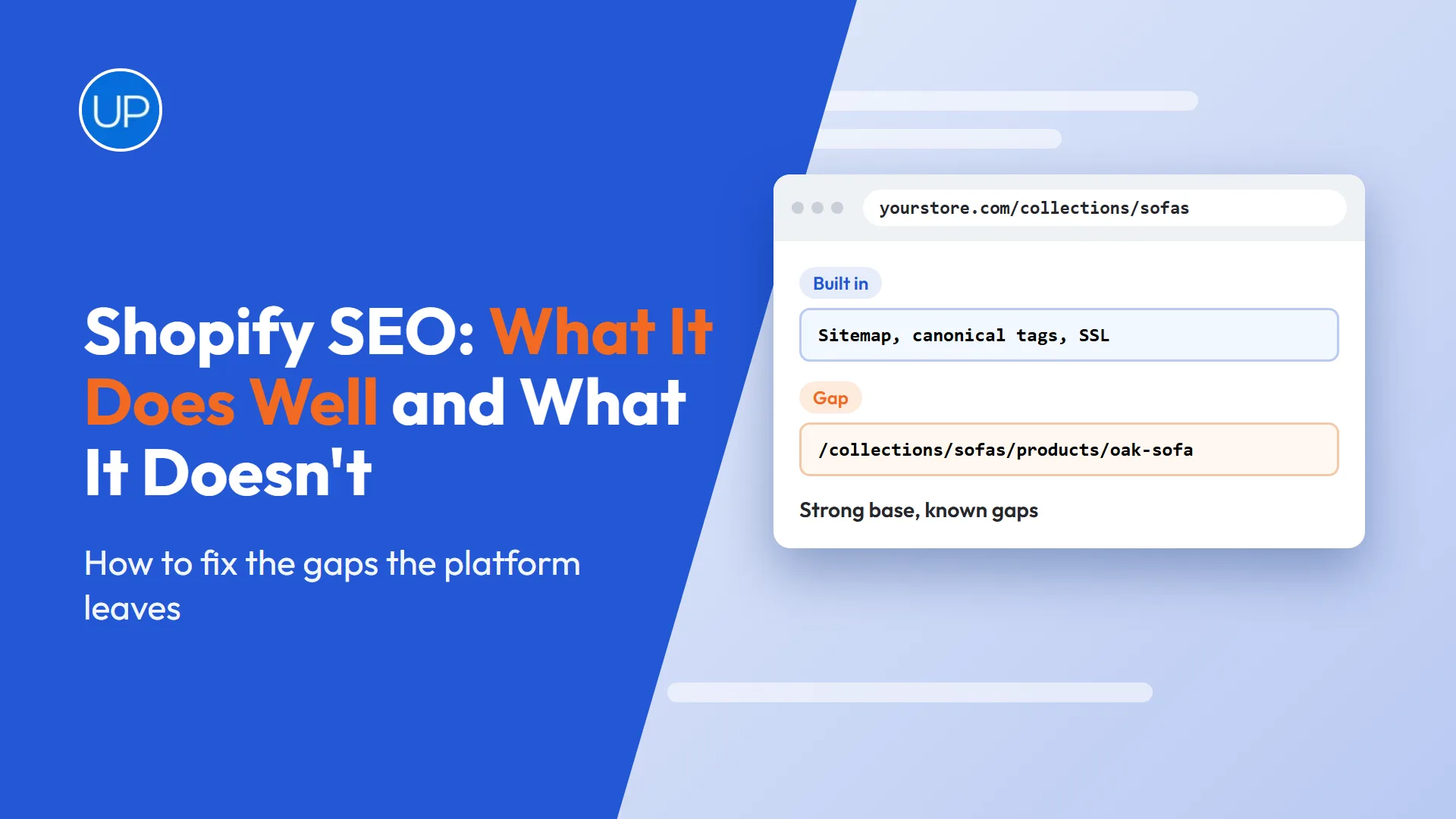
- Fixed URL prefixes. Products always sit under /products/, collections under /collections/ and blog posts under /blogs/. You cannot remove them.
- Duplicate product paths. Many themes link to products through /collections/name/products/item URLs. The canonical tag helps, but internal links still point to the duplicate.
- Filter, sort and tag URLs. Each filter combination can create a new crawlable URL, which spreads crawling across near identical pages.
- App bloat. Every app can add scripts to every page. A fast theme slows down quickly once a dozen apps are installed.
- Thin collection pages. Default collection templates show a product grid and little else, which gives Google very little to rank.
- A basic blog. The blog lacks categories and flexible templates, which makes topic clusters harder to build.
How Do You Close Those Gaps?
Each gap has a practical fix. Most need theme edits or a change of process rather than expensive development. Work through them in order of revenue impact.
- Clean up product links. Edit the theme so collection grids link to /products/ URLs directly. This removes most duplicate paths at the source.
- Control filter URLs. Keep filtered pages out of the index unless they match real search demand. Where a filter does have demand, build a proper collection for it instead.
- Audit your apps. Remove apps you no longer use and check that uninstalled apps have not left code in the theme.
- Write unique collection copy. Add a short introduction above the grid and supporting content below it, built around the collection’s main search term.
- Plan the blog around collections. Group articles by topic in the content itself and link each one to the collection it supports.
Some of these fixes touch theme code, so test them on a duplicate theme first. If you are not sure where your store stands, start with an SEO audit that lists the issues by impact before anyone edits the live theme.
What Does Fixing the Gaps Look Like in Practice?
A healthy technical setup is only the starting point. Stores grow when the collection pages are built to rank and overlapping pages stop competing with each other.
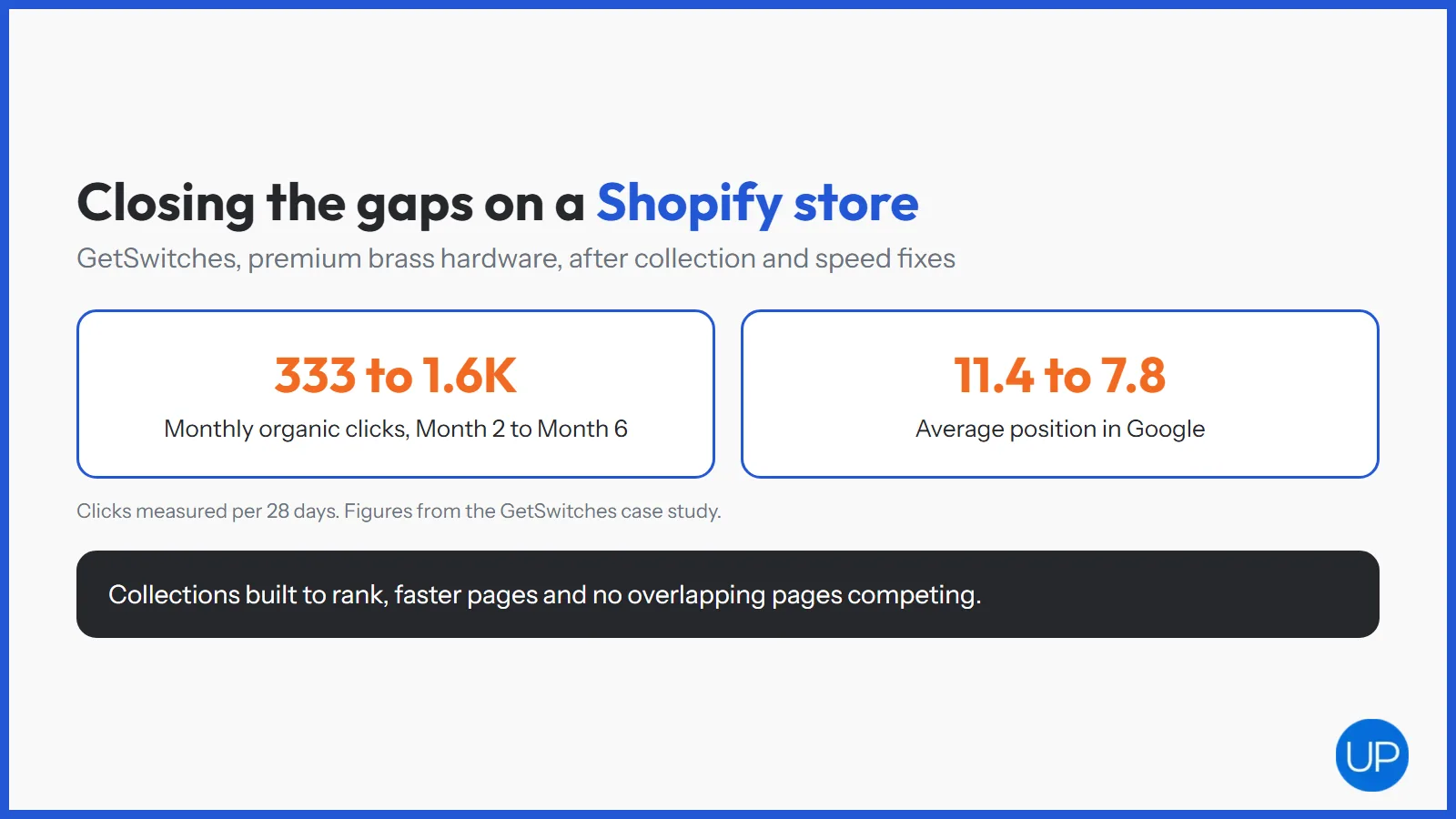
GetSwitches, a US Shopify store selling premium brass switches and wall plates, is a good example. It had a solid technical foundation, but its collection pages were not built to rank, page speed was holding it back and overlapping pages were competing with each other. After those gaps were closed, monthly organic clicks grew from 333 in Month 2 to 1.6K in Month 6, measured per 28 days, and average position improved from 11.4 to 7.8.
- Speed: images were converted to WebP and oversized media compressed.
- Collections: a scalable template with clear headings, copy and FAQs was rolled out to priority collections.
- Structure: cannibalisation was resolved and the hierarchy rebuilt around priority collections.
When Do You Need Specialist Help?
Many fixes above are manageable in house. Specialist help makes sense when the store is large, the theme is heavily customised or rankings have already dropped.
- Large catalogues where filter URLs and duplicate paths run into the thousands.
- Theme or app changes that need code edits and careful testing.
- International stores using Shopify Markets, where hreflang and duplicate regional pages need checking.
- Sudden drops that need a proper diagnosis, which is where technical SEO services fit best.
A dedicated Shopify SEO agency will know these platform quirks already, which shortens the time from diagnosis to results.
Is Shopify Holding Your Store Back?
Usually not. Shopify handles the technical basics well and leaves you with a known set of gaps: fixed URLs, duplicate paths, filter pages, app bloat and thin collections. Each one has a clear fix.
Stores that close those gaps and then invest in collection pages, supporting content and authority tend to see growth that compounds. The platform sets the floor. Your strategy, and an ecommerce SEO agency that understands it if you use one, sets the ceiling.
Frequently Asked Questions
Yes. Shopify lets you edit page titles, meta descriptions, URL handles, image alt text and content on every product, collection and page. It also creates sitemaps and canonical tags automatically. Most SEO work, from collection copy to internal links, can be done inside the admin and theme editor.
Google Search Console is the most useful free tool, because it shows the searches and pages that already earn clicks. Crawlers such as Screaming Frog help find duplicate and broken URLs. Shopify SEO apps can speed up bulk tasks like alt text, but they do not replace a strategy.
The main downsides are fixed URL structures, duplicate product paths through collections, crawlable filter and tag URLs, and slower pages when too many apps are installed. The blog is also basic. None of these stop a store ranking, but each needs managing.
Shopify and WooCommerce can both rank very well. Shopify is simpler and handles hosting and security for you, while WooCommerce offers more control over URLs and code. The better choice depends on your catalogue size, budget and how much technical control you need.
For most small and mid sized stores, yes. It remains reliable, fast to launch and well supported by apps and developers. From an SEO point of view, its known limits are manageable, so it is rarely the reason a store fails to grow.