Table of Contents
Most stores do not have a traffic problem. They have a keyword problem. They target broad terms they cannot win, or terms that attract browsers instead of buyers, and wonder why rankings never turn into revenue.
Good ecommerce keyword research fixes that at the source. This guide shows you how to find the searches your customers actually use, judge which ones are worth chasing and map each one to the right page on your store. It is written for store owners and marketers who want organic search to bring in sales, not just visits.
📌 TL;DR:
- Start with what already works: the queries in Google Search Console and the products that sell.
- Sort every keyword by intent, because buying searches belong on collection and product pages.
- Judge keywords on commercial value and realistic difficulty, not on search volume alone.
- Map one main keyword and a small cluster of close variants to each page so pages do not compete.
- Use informational keywords for guides that link back to the collections they support.
What Makes Ecommerce Keyword Research Different?
Keyword research for a store is less about finding the biggest numbers and more about finding buying intent. A smaller search that leads straight to a product page is often worth far more than a large search that leads nowhere.
- Page types matter. Stores need keywords for collections, products and guides, and each type wins different searches.
- Catalogues are large. Hundreds of collections need a structure, not a list of random terms.
- Margins vary. A keyword tied to a high margin range deserves more effort than one tied to a loss leader.
- Demand shifts. Seasonal products need keywords planned months ahead of peak demand.
Where Do You Find Keywords Your Buyers Use?
The best keyword sources are the ones closest to real customer behaviour. Start with your own data before turning to tools.
- Google Search Console: the queries already bringing impressions and clicks, especially those ranking on page two.
- Site search: the words customers type into your store’s search bar.
- Google autocomplete and related searches: the variations people add, such as sizes, materials and uses.
- Competitor collections: the categories and filters rival stores have built pages for.
- Keyword tools: Google Keyword Planner, Semrush or Ahrefs for volume, difficulty and wider ideas.
- Customer language: reviews, support emails and Reddit threads, which show how buyers describe products.
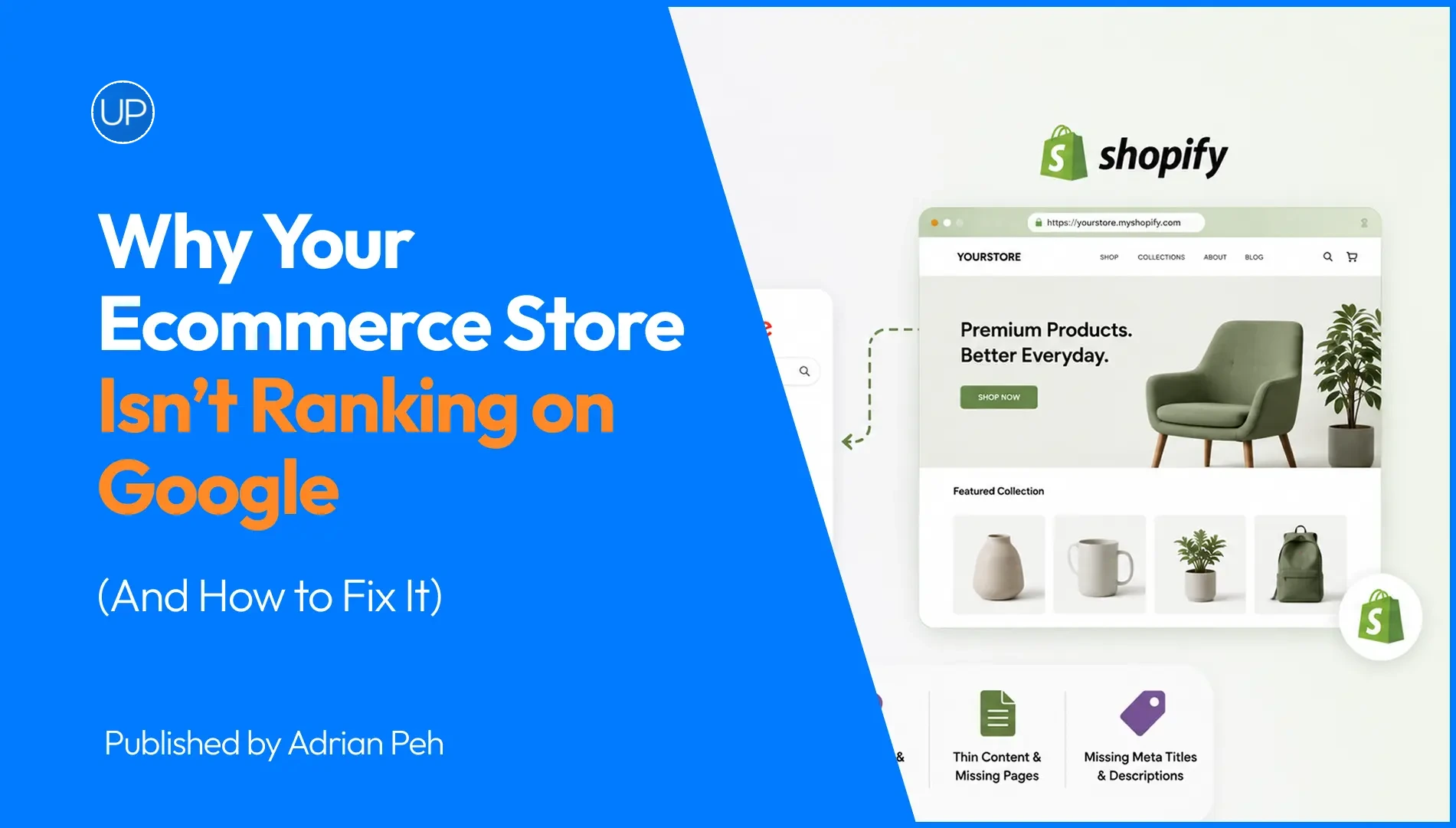
If your store already has traffic but little revenue, our guide on why your ecommerce store isn’t ranking on Google covers the wider causes worth ruling out first.
How Do You Judge Search Intent?
Intent tells you what the searcher wants to do, and therefore which page type should target the keyword. The quickest way to check intent is to search the term yourself and look at what Google already ranks.
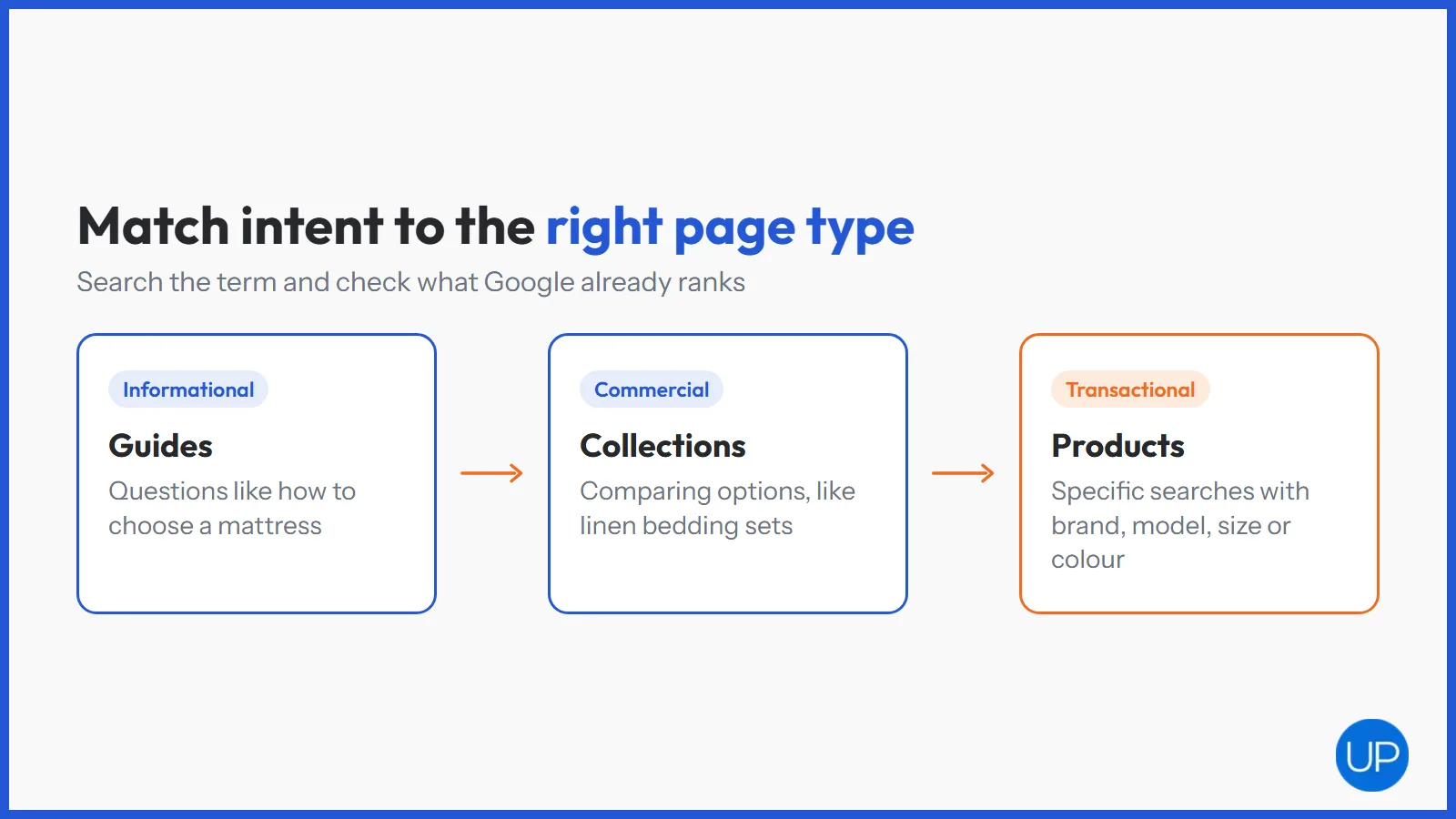
- Commercial: searches like “linen bedding sets” or “men’s running shoes”, where shoppers want to compare. These belong on collection pages.
- Transactional: specific searches with a brand, model, size or colour. These belong on product pages.
- Informational: questions like “how to choose a mattress”. These belong in guides and blog posts.
If the top results are all guides, a collection page will struggle to rank for that term, however well it is optimised. Match the page type Google already rewards.
Which Keywords Are Worth Targeting?
Volume is only one signal. A keyword earns a place on your list when it combines buying intent, commercial value and a realistic chance of ranking.
- Commercial value: does the keyword lead to products you sell, at margins worth chasing?
- Difficulty: compare the ranking pages with yours. Strong brands with deep content are harder to beat.
- Current position: keywords where you already rank between positions 5 and 20 usually move fastest.
- Long tail demand: specific phrases with lower volume often convert better and face less competition.
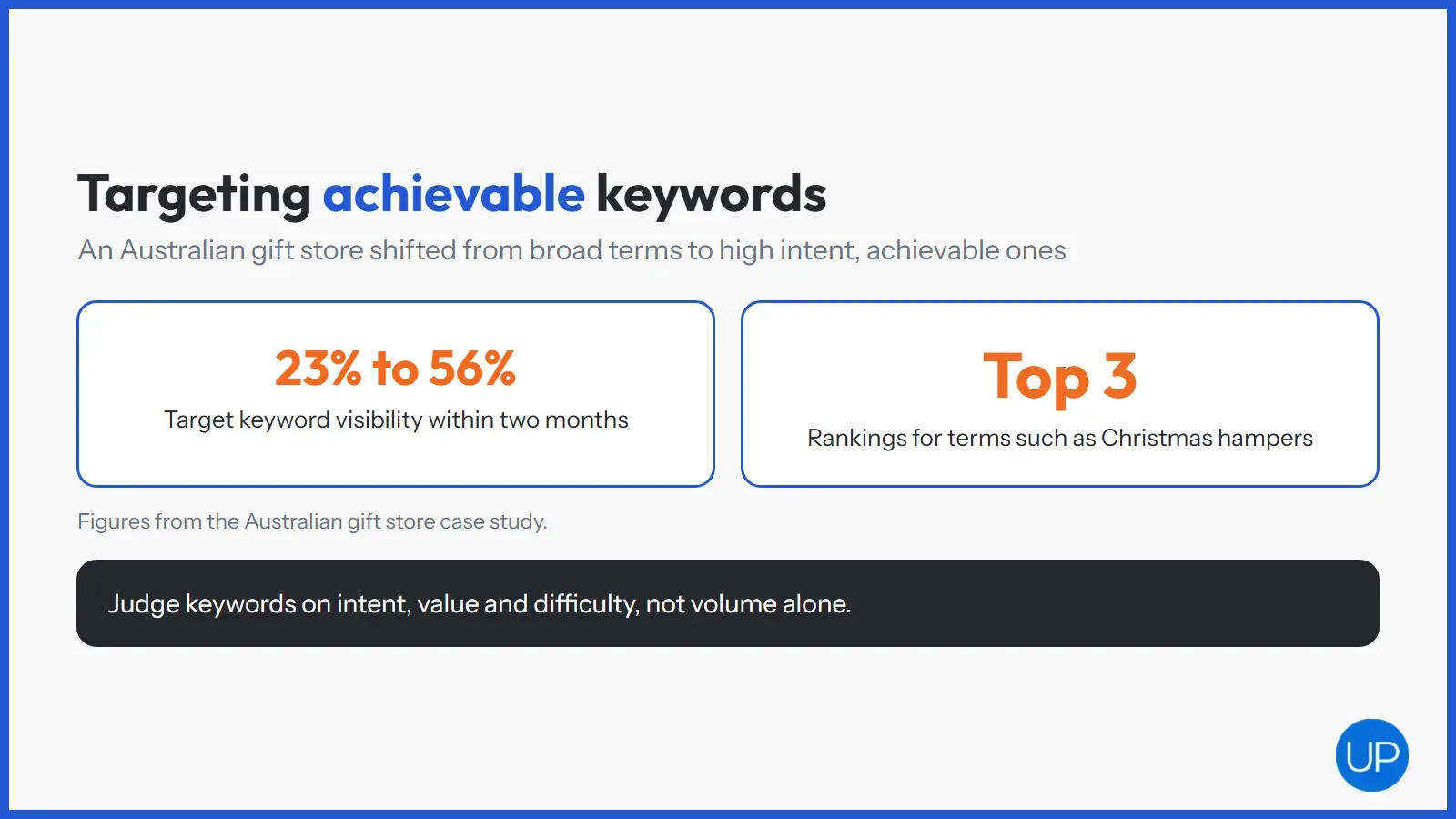
An Australian hamper and gift store shows why this matters. Its pages had been targeting broad, unrealistic keywords. After the focus shifted to high intent, achievable terms, target keyword visibility improved from 23% to 56% within two months, and the store reached top three rankings for terms such as Christmas hampers.
How Do You Map Keywords to Collections and Products?
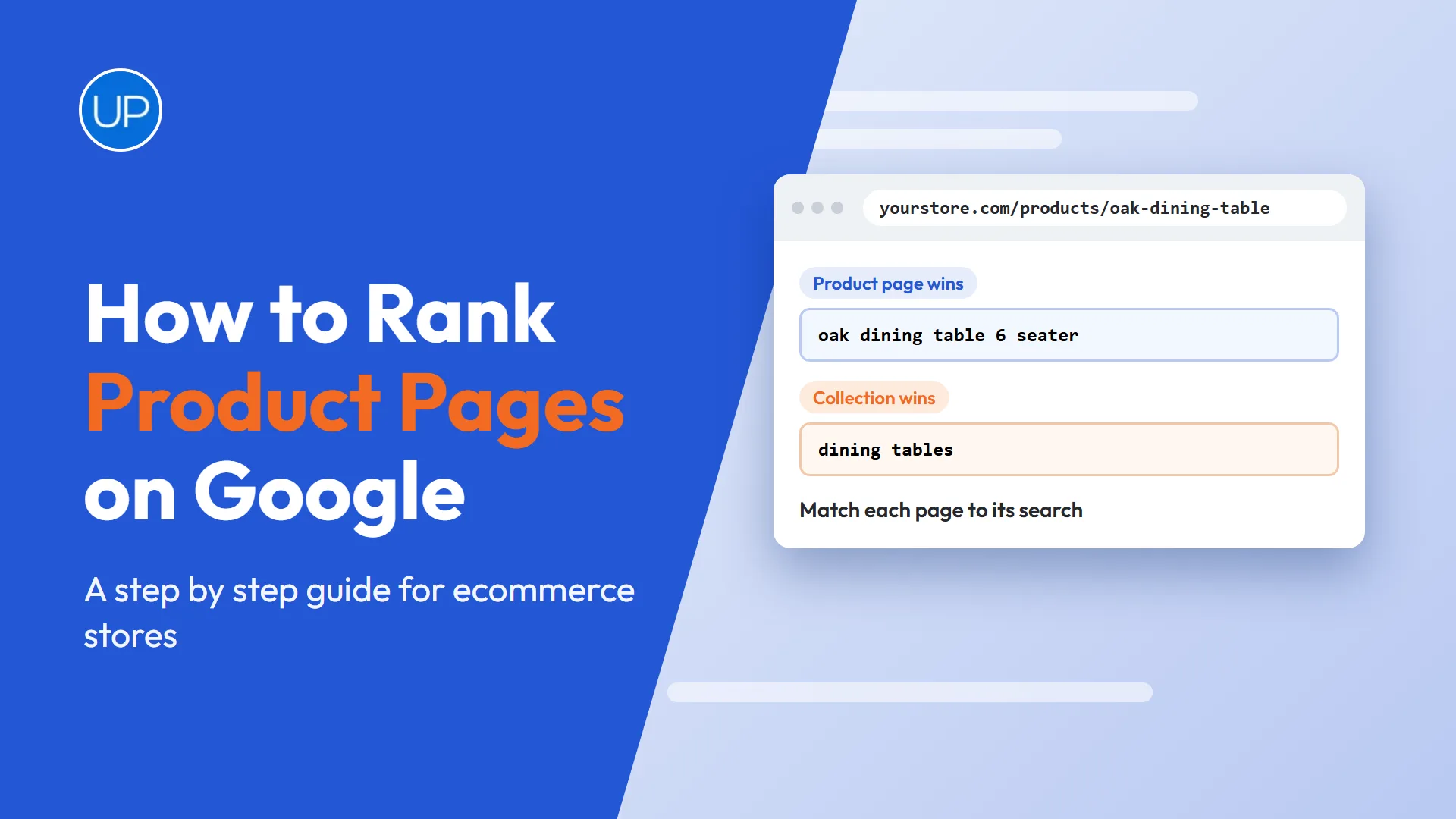
Mapping turns a keyword list into a plan. Each important page gets one main keyword and a small cluster of close variants, so every page has a clear job.
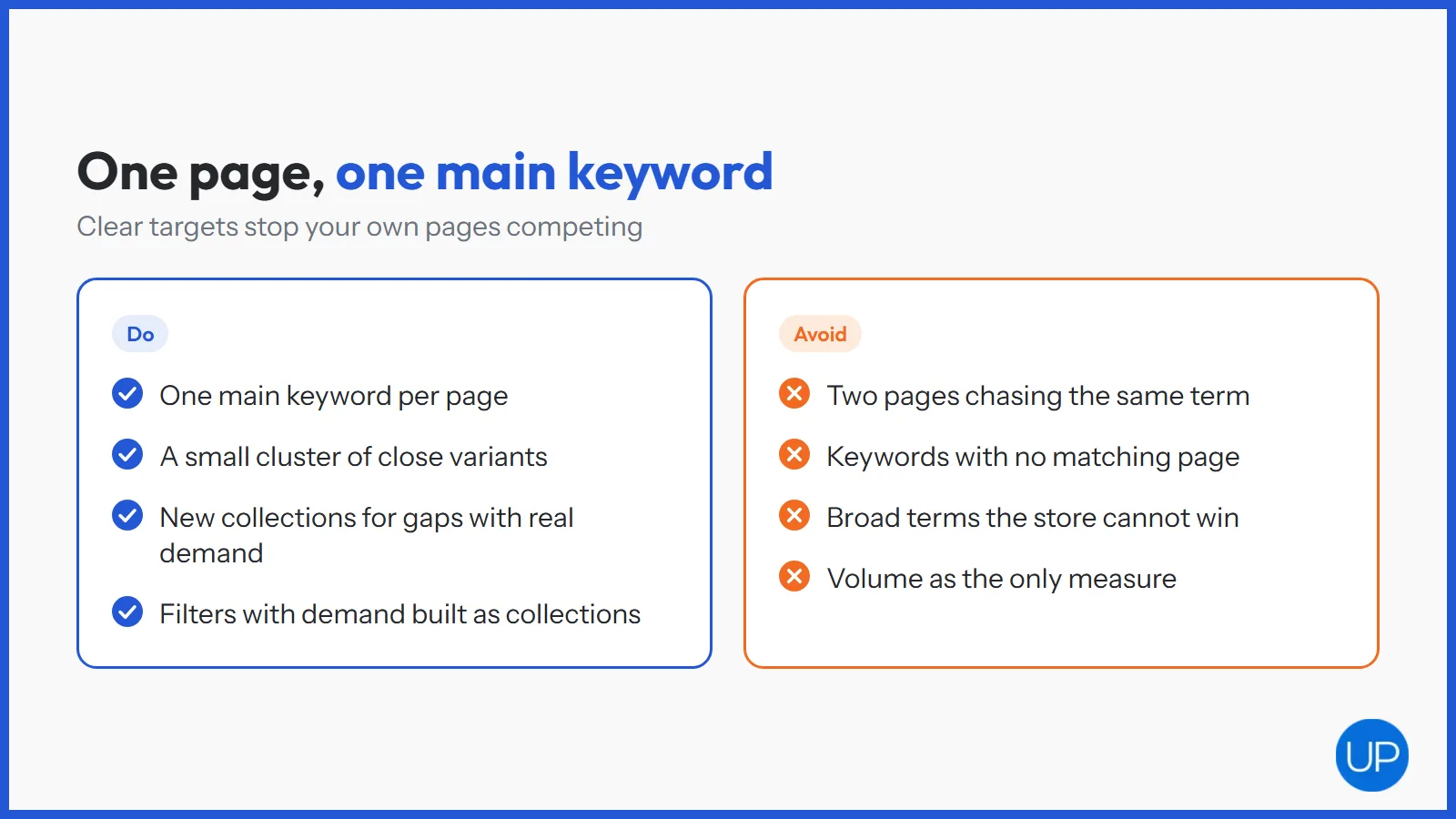
- One main keyword per page. Two pages targeting the same term compete with each other, which is known as keyword cannibalisation.
- Clusters of close variants. Group singular and plural forms and near synonyms on the same page.
- Gaps become new pages. A keyword with real demand and no matching page is a case for a new collection.
- Filters with demand. If “black leather sofas” has its own demand, it may deserve its own collection rather than a filter.
Mapping across a full catalogue is where an outside view often helps. SEO consulting services can build the map and leave your team to run it.
How Do You Use Keywords Once They Are Mapped?
Research only pays off when the keywords shape the pages. Use each page’s main keyword in the places Google reads first, then support it with useful content.
- Title tag and H1 built around the main keyword.
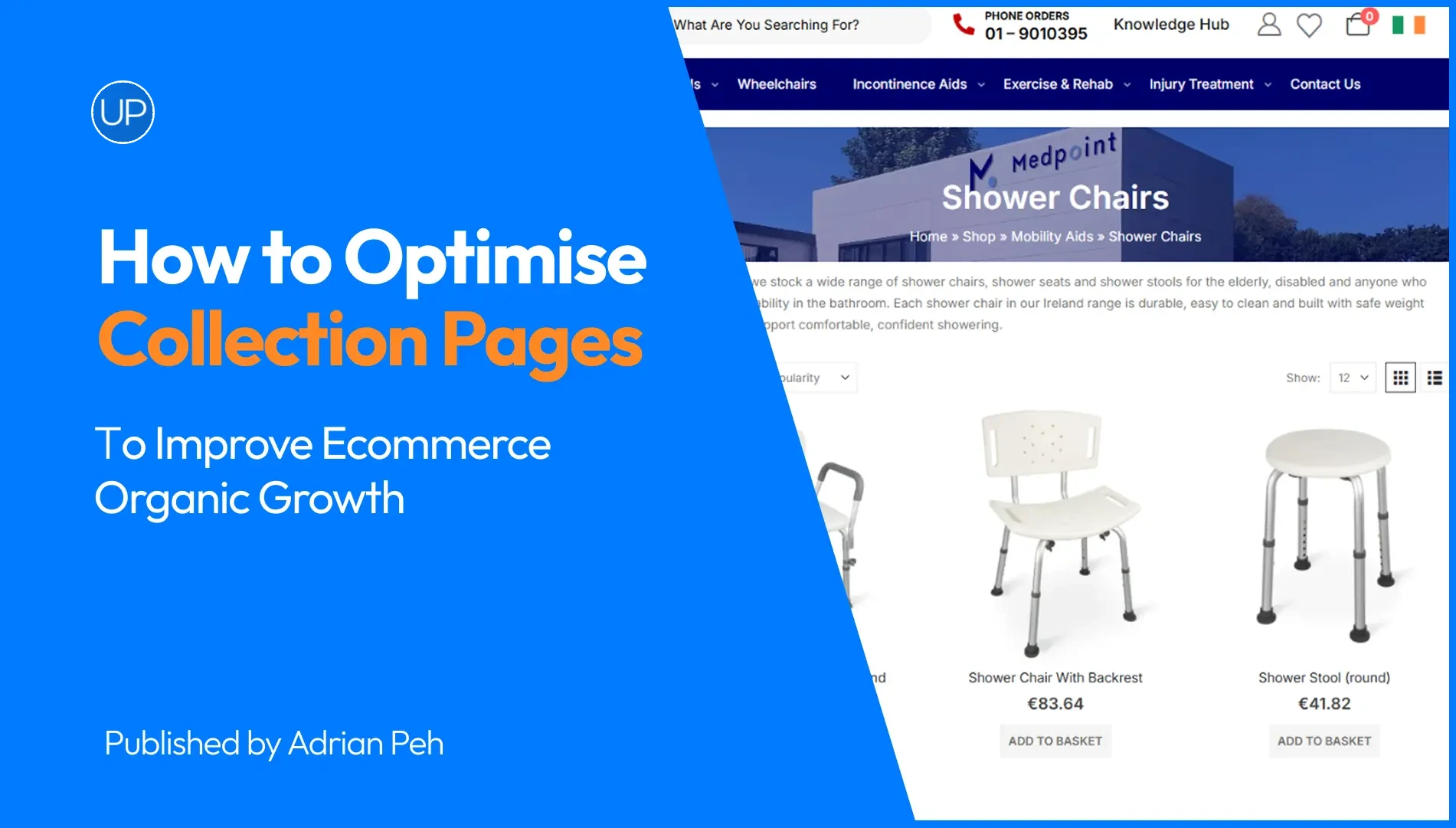
- Collection introductions that use the keyword naturally and explain the range.
- Product copy that includes the attributes people search for.
- Internal links using descriptive anchors that point to the page targeting that keyword.
This is the overlap between research and on page SEO services. For guides built around informational keywords, an SEO content writing service keeps the articles linked to the collections they support.
Does Your Platform Change the Approach?
The research method is the same on any platform, but the way you build pages from it differs. Platform limits affect how easily you can create new collections and control URLs.
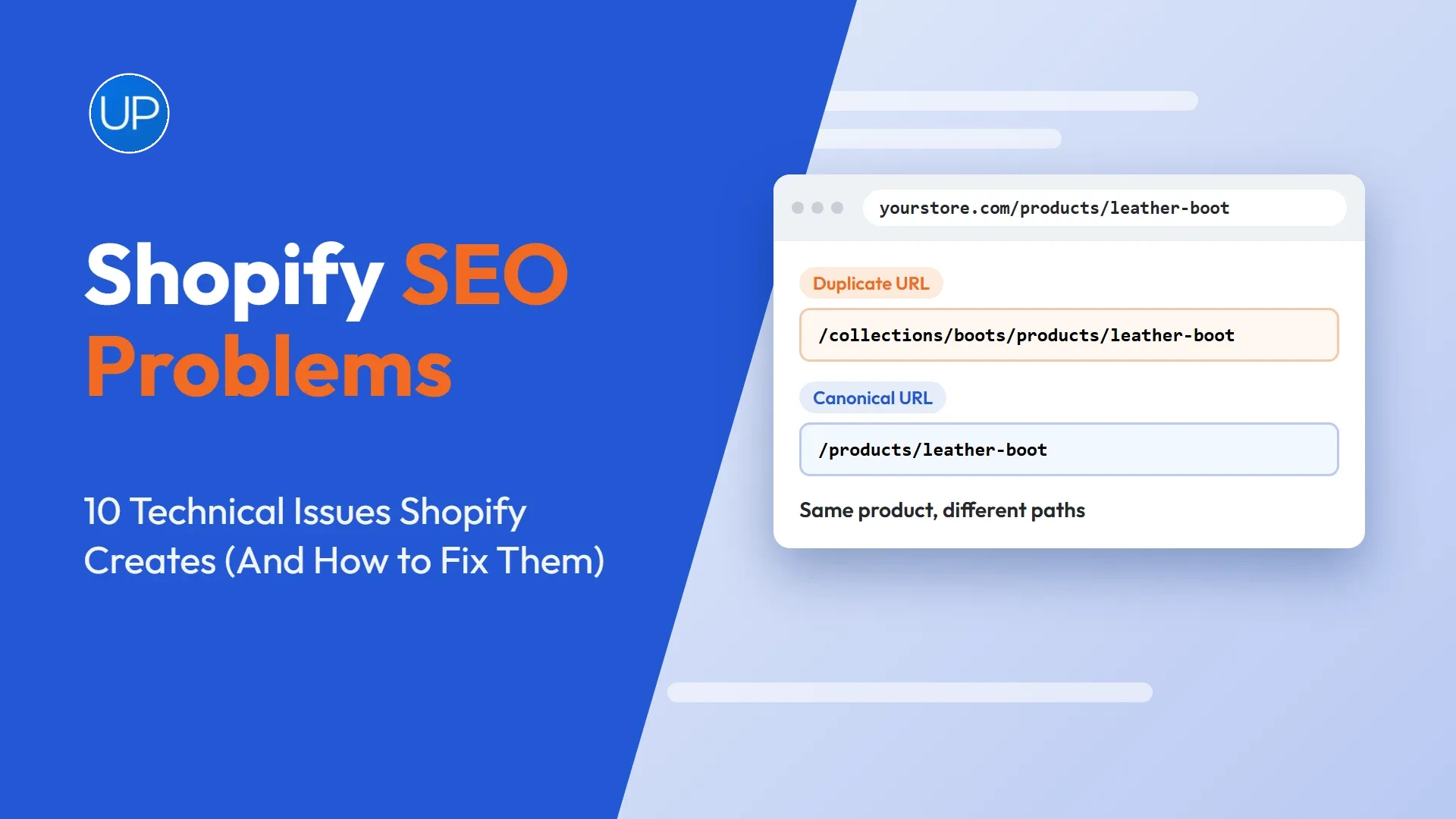
- Shopify: new collections are simple to create, but filter and tag URLs need managing so they do not compete with the collections you build. A Shopify SEO specialist will plan around these limits.
- WooCommerce: categories, tags and attributes give more control, but can multiply into thin archive pages. A WordPress WooCommerce SEO agency can keep that structure tidy.
How Do You Turn Keyword Research Into Sales?
Ecommerce keyword research works when it is tied to revenue from the start. Begin with Search Console and your best sellers, sort keywords by intent, prioritise by value and difficulty, then give every important page one clear target.
Revisit the map every few months as demand, stock and rankings change. Stores that keep their keyword strategy current build growth that compounds, and an ecommerce SEO services partner can keep that process running when your team is busy.
Frequently Asked Questions
Start with seed terms from your products and Google Search Console, then expand them with keyword tools, autocomplete and competitor collections. Sort the results by intent and value, and map each keyword to a collection, product or guide. Review the map regularly as demand changes.
Good ecommerce keywords show clear buying intent and match products you sell, such as a product type with a size, material or use. Long tail phrases often convert better than broad terms. The best keywords also have competition you can realistically beat.
The best approach combines your own data with tools. Search Console shows what already works, keyword tools show wider demand, and checking the live search results shows intent. Prioritise keywords by commercial value and difficulty rather than search volume alone.
Yes. Google Search Console, Google Keyword Planner, autocomplete and related searches are all free, and your own site search data costs nothing. Paid tools add difficulty scores and competitor data, which helps on larger catalogues.
Yes. Beginners can handle the basics, such as keyword research, page titles, product copy and internal links, with free tools and guides. Larger stores, technical problems and migrations usually benefit from specialist help.