Table of Contents
Shoppers no longer scroll through ten blue links before they buy. For many product questions, Google’s AI Overviews now give a summary at the top of the page, with a handful of cited sources underneath.
If your store is one of those sources, you are in front of the buyer before any competitor. If it is not, you can rank on page one and still be ignored. This guide explains how AI Overviews choose sources and the practical steps an ecommerce store can take to be cited more often. It is written for store owners and marketers who want visibility in AI search as well as traditional rankings.
📌 TL;DR:
- AI Overviews draw on pages Google has already crawled and indexed, so technical health comes first.
- Google says there is no special markup for AI Overviews. Strong SEO foundations are what count.
- Pages that answer buyer questions clearly and specifically are the ones most likely to be cited.
- Accurate product data, through structured data and Merchant Center, helps Google understand what you sell.
- Track the keywords and prompts where you appear, then build guides and collections around the gaps.
How Do Google’s AI Overviews Choose Their Sources?
AI Overviews are built from Google’s search index. When a search triggers one, Google generates a summary and links to pages that support it. Those pages are usually ones that already rank well, or that answer part of the question better than anything else.
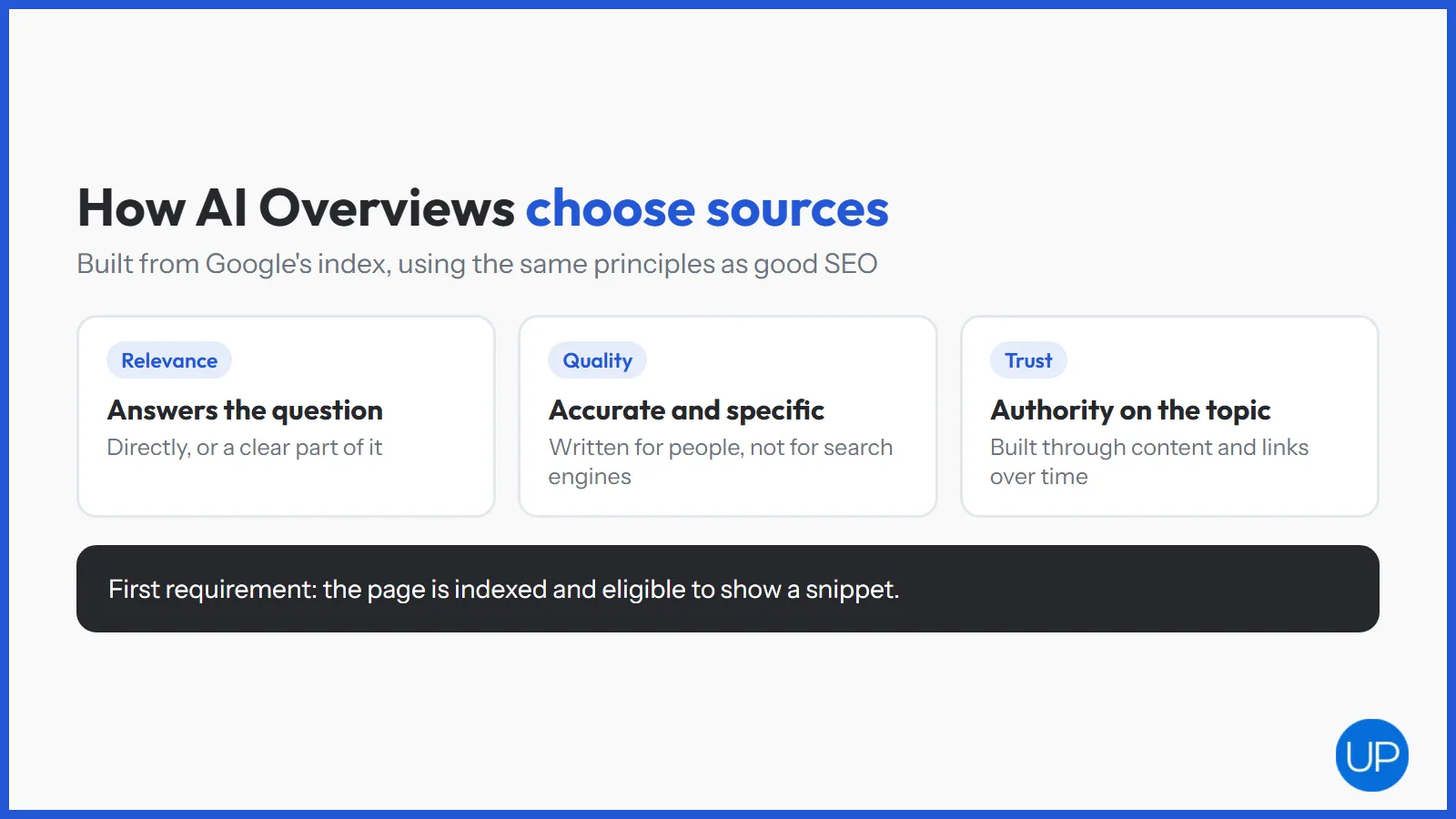
Google’s own guidance on generative AI features in Search is clear on the basics. A page needs to be indexed and eligible to show a snippet. Beyond that, the same principles behind good SEO apply.
- Relevance: the page directly answers the question or a clear part of it.
- Quality: the content is accurate, specific and written for people.
- Trust: the site has authority on the topic, built through content and links over time.
Why Do AI Overviews Matter for Online Stores?
AI Overviews appear most often on informational and comparison searches. For stores, those are the research searches that happen just before a purchase, such as which material to choose or how two products compare.
- Earlier influence. Being cited puts your brand in front of shoppers while they are still deciding.
- Fewer clicks overall. Some searches end at the overview, so being one of the cited sources matters more.
- Wider AI visibility. The same content often helps in Google AI Mode, ChatGPT and Gemini.
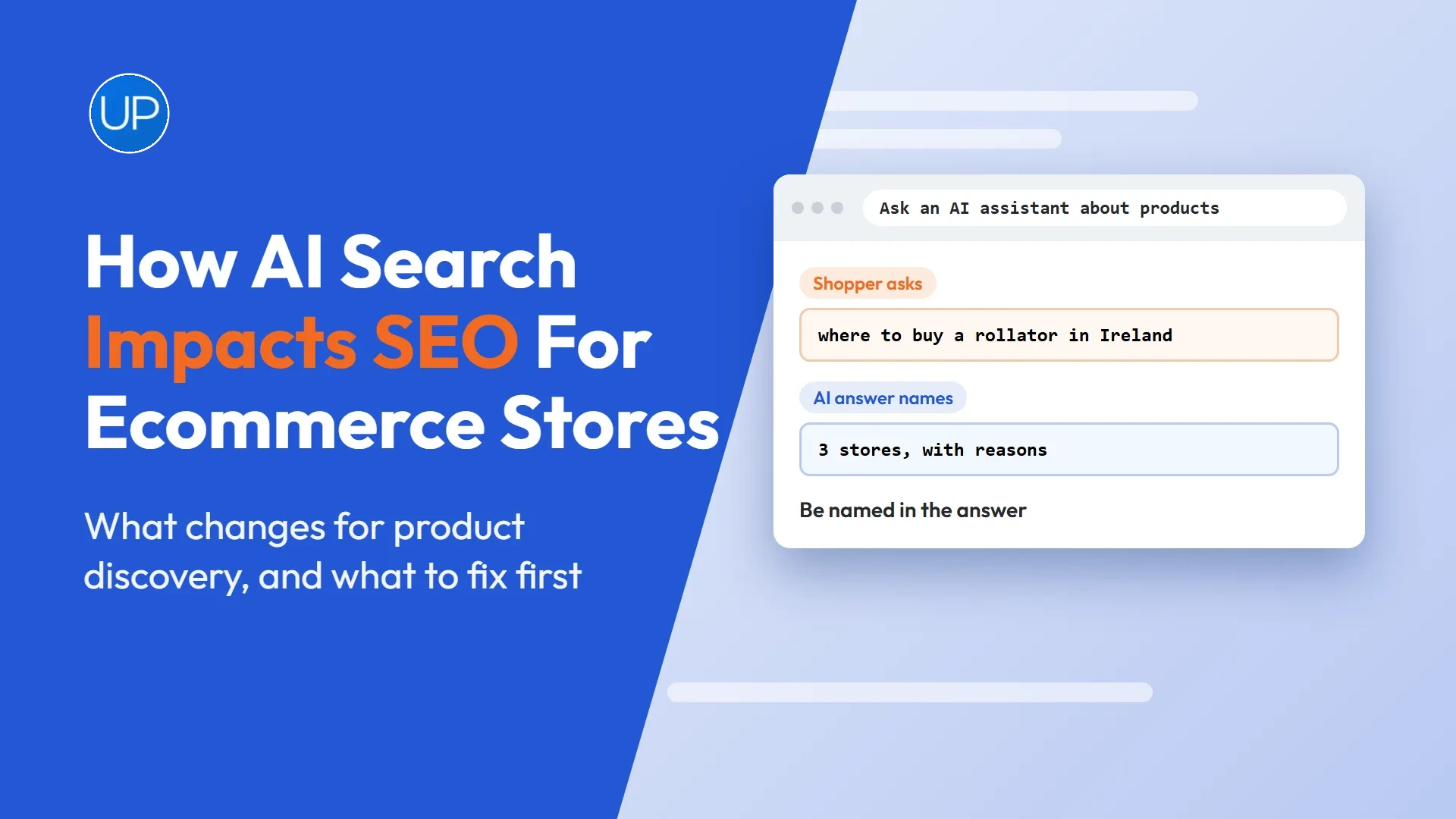
Our article on how AI search impacts SEO for ecommerce stores covers the wider shift. Here we focus on the practical steps for Google.
Which Technical Basics Come First?
An overview cannot cite a page Google cannot crawl, render or index. Before any content work, make sure the foundations are sound.
- Indexing: check the Page indexing report in Search Console for important pages that are excluded.
- Snippets allowed: avoid nosnippet tags on pages you want cited.
- Rendering: key content should appear in the HTML, not only after heavy JavaScript runs.
- Speed: slow, unstable pages are a poor experience for shoppers who do click through.
- Clean structure: clear headings, logical internal links and no duplicate versions of the same page.
These checks are standard in technical SEO services, and they matter even more now that AI features depend on them.
What Content Gets Cited in AI Overviews?
AI Overviews reward content that answers a specific question in a clear, self contained way. Generic product blurbs and thin category pages rarely make the cut.
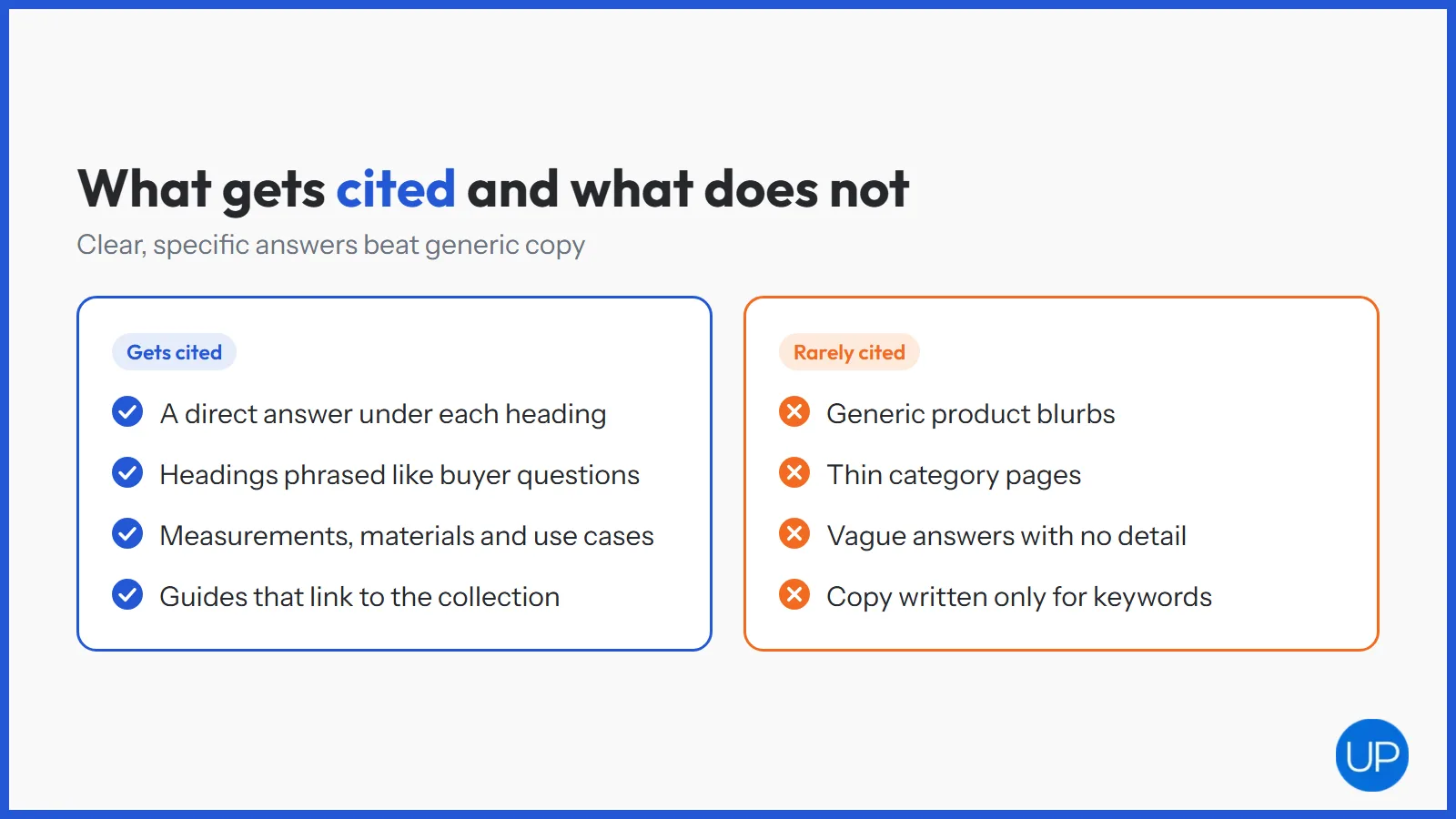
- Answer first. Put a direct answer in the first sentence under each heading, then expand on it.
- Use question headings. Phrase headings the way shoppers ask, such as “which vanity height is right for a family bathroom”.
- Be specific. Include measurements, materials, use cases and comparisons that only a real retailer would know.
- Build guides around collections. Buying guides and comparisons that link to the relevant collection give Google both the answer and the product.
- Add useful collection copy. A short introduction and FAQs on collection pages give Google more to cite.
Writing this way at scale takes time. An SEO copywriting agency that understands ecommerce can produce guides that serve shoppers and AI features at once, while on page SEO services keep the headings and structure consistent.
How Does Product Data Help?
Google needs to understand what you sell before it can mention your products. Clear, consistent product data removes the guesswork.
- Product structured data with name, brand, price, availability and reviews, matching what is visible on the page.
- Google Merchant Center feeds that keep prices and stock accurate across Google’s surfaces.
- Consistent naming of products and brands across your site, feed and listings.
- Policy pages for delivery and returns that are easy to find and read.
Platform setup affects how complete this data is. A Shopify SEO agency will usually check theme markup and feed apps together, and WooCommerce stores often need plugin settings reviewed by WooCommerce SEO specialists.
What Does Progress in AI Overviews Look Like?
Visibility in AI Overviews tends to build alongside traditional rankings, not instead of them. Stores that improve collections and supporting guides usually see both move.
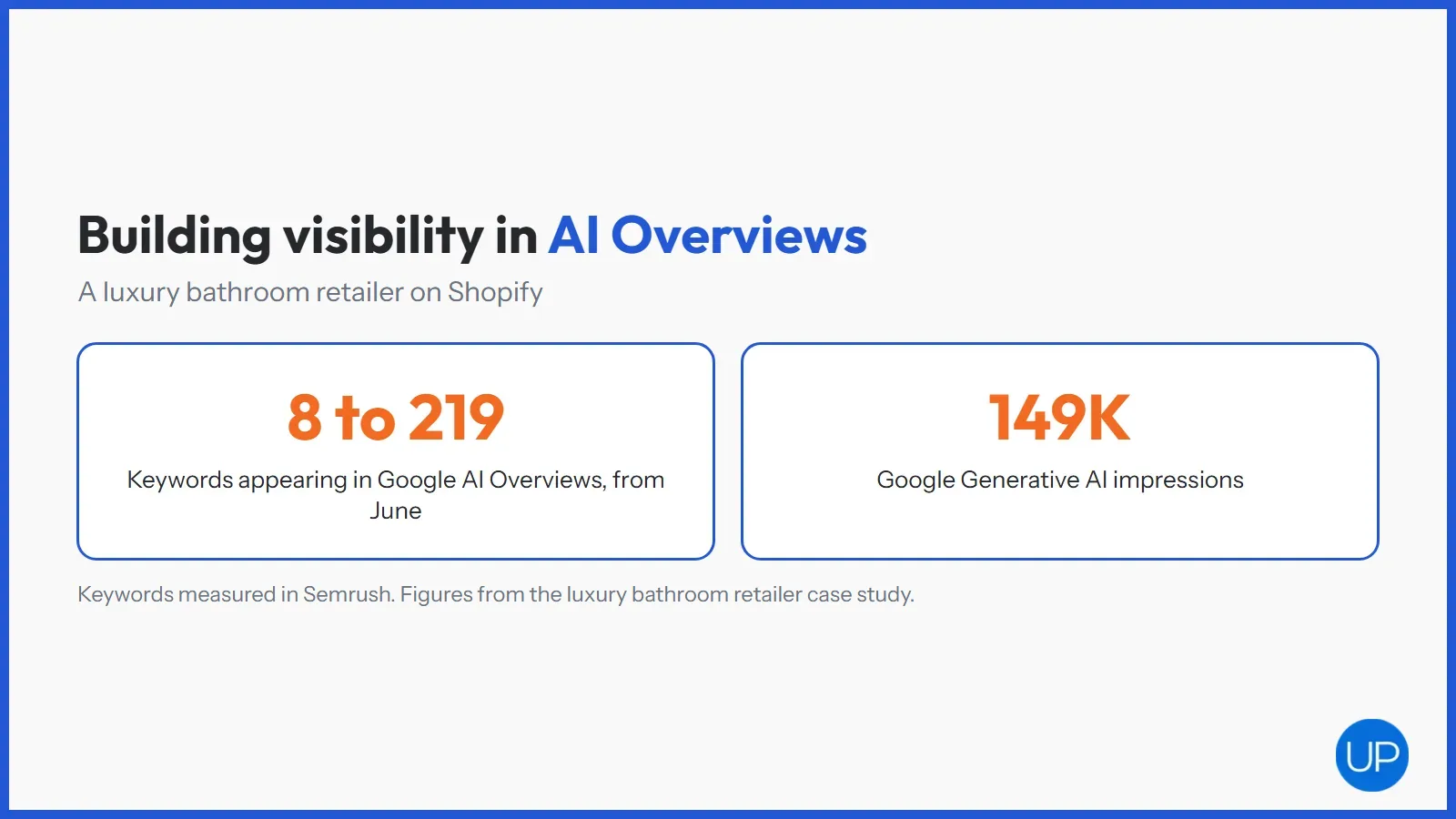
A luxury Australian bathroom retailer on Shopify is a useful example. The team tracked 100 priority prompts and built collections and guides to be cited. The number of keywords appearing in Google AI Overviews grew from 8 in June to 219, measured in Semrush, and Google’s Generative AI impressions reached 149K.
- Guides that already earned traffic were kept up to date rather than left to age.
- Collection pages were mapped to search intent and given short introductions.
- Tracking covered ChatGPT, Google AI Overviews, AI Mode and Gemini, not just one platform.
How Do You Track AI Overview Visibility?
You cannot improve what you do not measure. Tracking shows which topics you already own and where competitors are cited instead.
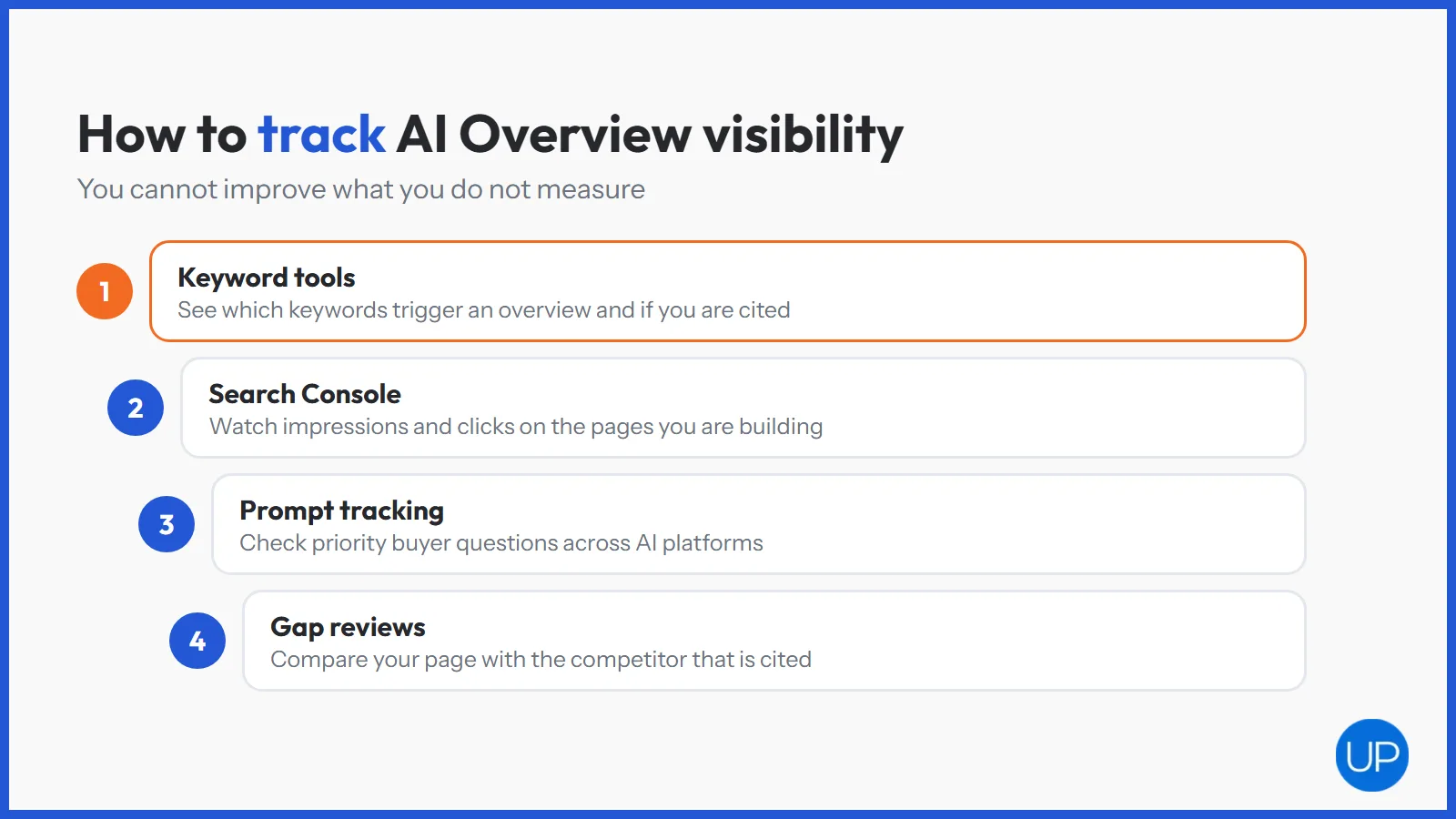
- Keyword tools: Semrush and similar tools show which of your keywords trigger an AI Overview and whether you are cited.
- Search Console: watch impressions and clicks on the pages you are building for AI features.
- Prompt tracking: keep a list of priority buyer questions and check them regularly across AI platforms.
- Gap reviews: where a competitor is cited and you are not, compare the pages and close the gap.
For stores that want this run as a system, AI SEO services combine tracking, content and authority building in one plan.
Where Should You Start?
Being cited in Google’s AI Overviews starts with the same foundations as ranking well. Fix indexing and rendering, answer buyer questions clearly, keep product data accurate and track where you appear.
Start with the questions your customers ask most before they buy, and build or improve one guide and one collection for each. As those pages earn citations, the same approach can be repeated across the catalogue, with an ecommerce SEO agency supporting the work if you need extra hands.
Frequently Asked Questions
Make sure your pages are indexed and allowed to show snippets, then focus on clear, specific answers to the questions your buyers ask. Use question headings, answer first, and support pages with accurate structured data. Google says no special markup is needed beyond good SEO.
Pages that appear tend to rank well already and answer part of the search clearly. Improve the pages closest to page one, add direct answers under each heading and build authority on the topic over time. Track which searches show an overview so you know where to focus.
Start with technical health so AI systems can crawl and read your pages. Then publish specific, trustworthy content, keep product data consistent across your site and feeds, and earn mentions and links from relevant sites. The same work helps in Google, ChatGPT and Gemini.
Yes. AI Overviews and AI assistants rely on web pages that search engines can crawl, index and trust. SEO is widening to include AI visibility, but rankings, content quality and authority remain the foundation.
Nothing is replacing it outright. Terms like answer engine optimisation and generative engine optimisation describe extra work aimed at AI answers, but they build on the same foundations as traditional SEO rather than replacing them.